 By The UNCHARTED® editors10 min read
WRITTEN BY
Sandy Cunningham
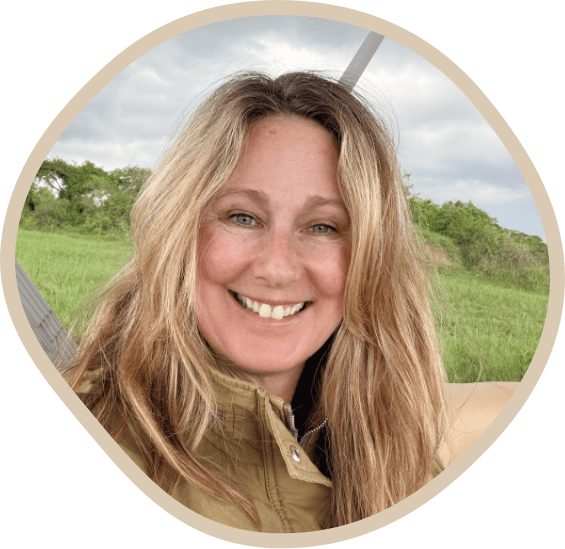
This spring, I spent almost three months in Southern Africa, where I grew up. It was the longest stretch I'd spent there since I left at fifteen. Being back in my home countries of Zimbabwe and South Africa and taking safaris throughout the region all felt like the gift of a lifetime revisited.
On my April trip to Zimbabwe, where we lived when it was still Rhodesia, I was joined by Trish, a dear friend and client from Fort Worth, who said simply, "I want to have my 60th birthday in Africa." We met up in Johannesburg and flew up to Bulawayo, Zimbabwe, where my grandparents raised four daughters; we would visit them to spend Easter and Christmas holidays, even during the Bush War of the 60s and 70s. My parents met there, and our first destination was the Matobo Hills, where they got engaged. So this trip was more than a safari — it was a celebration of life and a homecoming that included scattering my late parents' ashes in certain special spots where they belong.
Matobo: The Hills Are Alive
Our old friends Philip and Sharon Stead own the Amalinda Safari Collection, an outstanding quartet of lodges in Matobo National Park and on their private concession in Hwange National Park. Sharon's great-great-grandfather explored with Frederick Selous and is credited with creating the Rhodesian Ridgeback breed, which has basically been my spirit animal since the days when they were our security guard dogs during the Bush War.
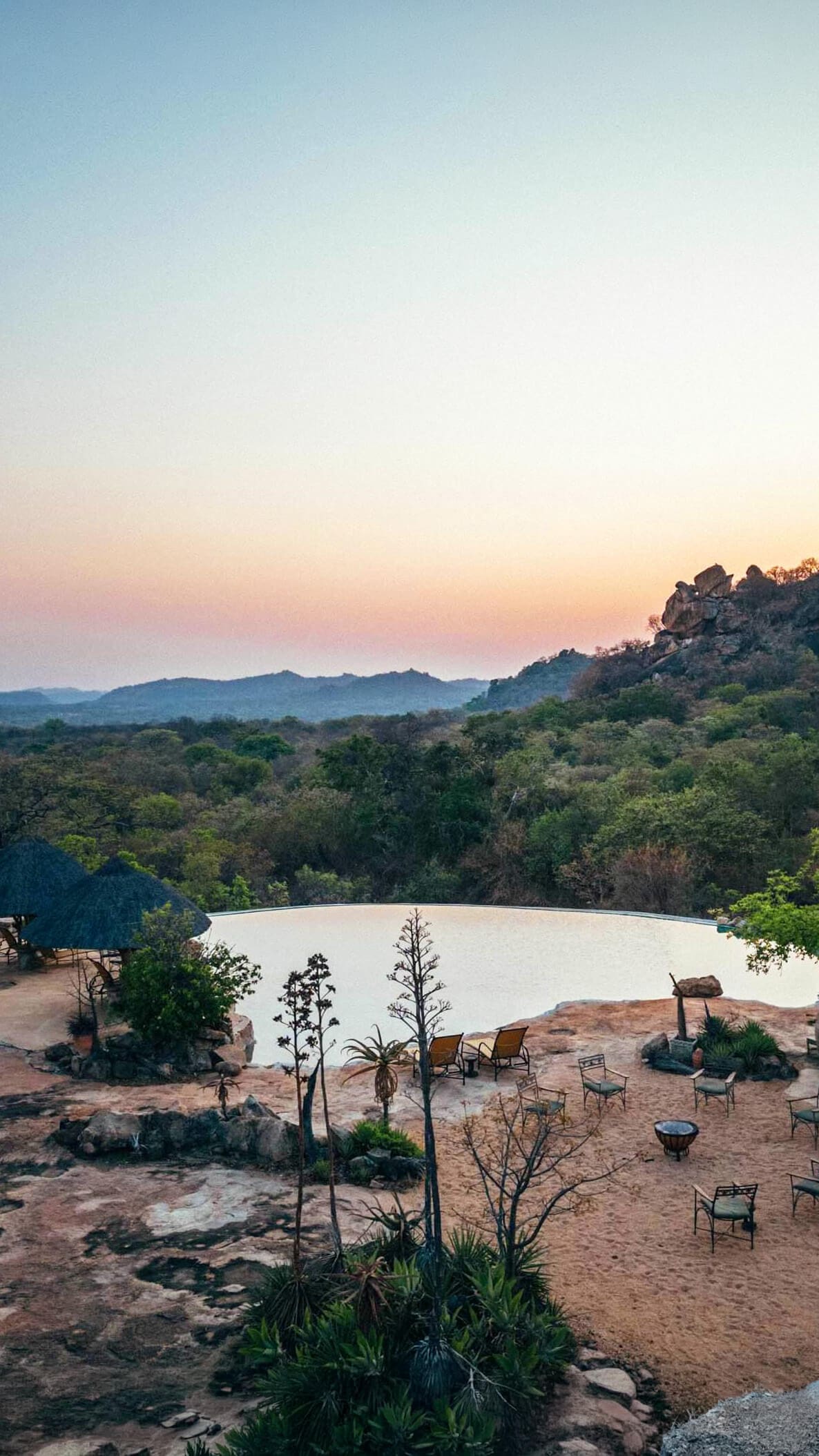
Matobo National Park is one of the most extraordinary places in Africa, yet relatively unknown outside of Zim. The entire park is pocked with huge granite boulders and outcroppings called kopjes (pronounced "koppies"), and it's a UNESCO World Heritage Site because it holds thousands of San Bushmen rock art images. Often described as the spiritual center of Africa, there's a deep, deep sacredness to the place that goes back eons. The Steads built Amalinda Lodge right into the kopjes many years ago, and the rooms are cave-like, simultaneously primitive and luxuriously cinematic — the Flintstones gone Hollywood. There's no other place like it. The last time I visited Amalinda, years ago, Phil stood with us on a huge, indented rock that provides a long view and said, "I'm going to build a swimming pool here." Now this special place has quite possibly the most magical pool in Africa.
FEATURED OUTPOST
"The Flintstones gone Hollywood."
In just a couple of days there, we saw so much wildlife — giraffe, rhino, zebra, even a zonkey (a zebra-donkey hybrid), and lots of warthogs. Our guide led us on foot to track a mother rhino and her calf. We visited the gravesite of Cecil John Rhodes, the namesake of Rhodesia. We clambered through the rocks to reach caves holding ancient rock art, and our guide told us story after story about the images. In one cave he asked, "Do you see that painting over there?" Neither of us could see anything until he cupped his hand against the rock and cast a shadow shaped like a woman's figure — the "Shady Lady." From then on, we called our whole trip the Shady Lady Safari.
You go to the Matobo Hills for the spirit vibes, the culture, and the history from the ancient through the colonial era and the Bush War, and into modern-day Zimbabwe, which is recovering from recent decades of political and financial crises. That's what makes the Matobos and Amalinda a fascinating and indispensable stay on a Zimbabwe safari. It's safari Africa in a nutshell.
From there we set off with our guide on the long, rough drive from Matobo to Hwange National Park. I loved seeing Zimbabwe from the road, the villages we passed, the towns where we stopped to grab a bite. We used to drive that same road from Harare to Victoria Falls. My grandparents lived in Bulawayo before later moving to Cape Town, and our family road trips — camping, visiting national parks — slowed down considerably because of the war, though we still occasionally traveled cross-country in armed convoys. Traveling through the now-peaceful country was a reminder that history never stops happening, and that even dire conditions can turn around.
"Simultaneously primitive and luxuriously cinematic — the Flintstones gone Hollywood."
Hwange: Lions in the Night
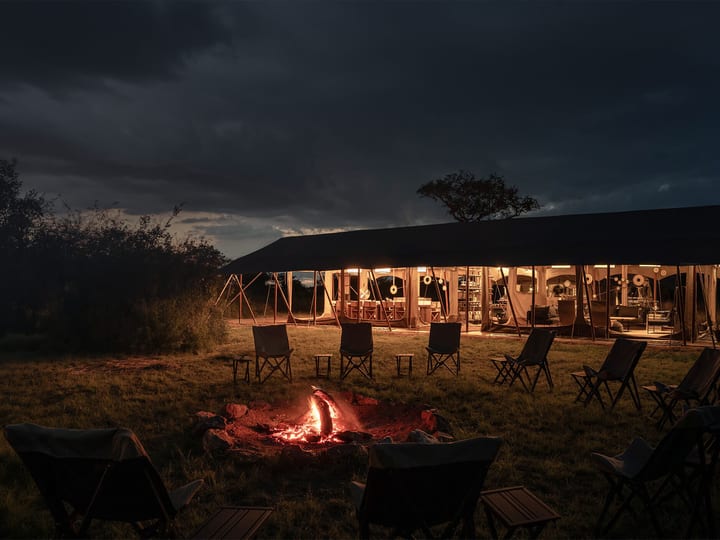
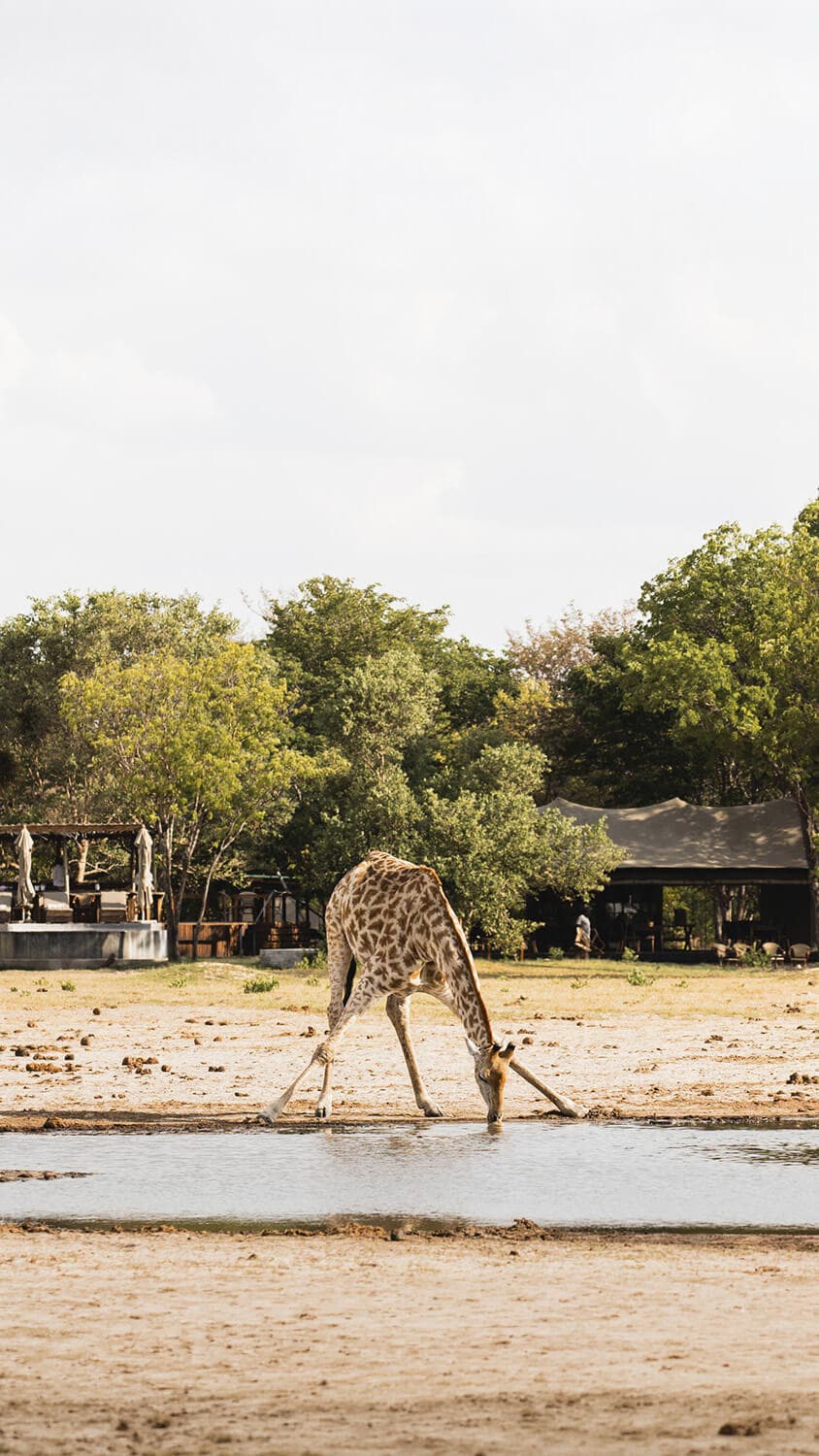
We arrived at the Steads' concession on the eastern side of Hwange National Park, at their lovely Khulu Bush Camp, which sits above a gorgeous watering hole with a big pan just beyond it. After afternoon tea, we were shown to our tents and headed straight out on the most incredible game drive. The skies cast afternoon light on huge herds of elephants as they came down to drink, big herds of buffalo moving through, along with all the usual suspects like antelope and zebra. We had the place virtually to ourselves, and the experience was one of pure, untouched Africa. When you envision the pristine wild of nature documentaries, this is what you see.
On our way back to camp, we stopped for the most spectacular sundowners: The guides had set up a bar with a dozen or so bottles of brightly colored flavored gins lined up along a fallen log, like a rainbow. We had the most divine birthday cocktails for Trish, since this was her big day. Back at camp, we showered and sat down to a delicious steak dinner, followed by birthday cake. Then, in our pajamas and bathrobes, toiletry bags in hand, our guides drove us up to the treehouse for the night. It was dusk, nearly full dark. Because the moon didn't rise until around 2 a.m., the southern night sky was extraordinary.
FEATURED OUTPOST
Little Makololo
"Pure, untouched Africa."
Unlike most skybed treehouses, there was no gate at the bottom or the top, and the loo was almost at ground level. Anything could wander up those stairs, though our guides assured us nothing would. We had another glass of wine, a couple of tots of Amarula Cream Liqueur, and finally fell asleep.
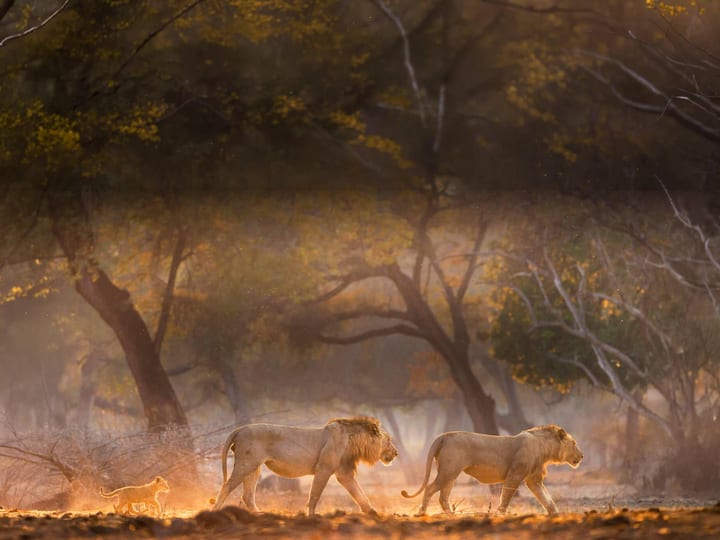
I woke around 2 a.m. to the sound of lions, but they were far off, so I thought nothing of it and drifted back to sleep. About an hour later, I woke again — the lion was very close. I woke Trish and said, "We need to be prepared. I've got the radio ready, I've got the spotlight — you hold the foghorn, and I'll check where the lion is." Using the powerful torch our guide had given us, I looked down: not fifty yards from our treehouse stood an absolutely enormous male lion. He seemed rather put out that I was shining a light in his eyes, glanced up at me, and ambled off. I didn't sleep much after that — my mind kept running through what we'd do if he came up: throw furniture, spray bug spray, sound the foghorn, radio the guides, and hope for the best!
When our guides came to collect us at 7 a.m., I told them there'd been a lion right below us. They laughed it off — "of course there wasn't" — until I walked them over and showed them the tracks. Not one lion, but two, and they even had names: Alan and Elliot. We'd survived Trish's 60th birthday night in a treehouse in Khulu Bush Camp. A memorable birthday, indeed.
Our next stop was Little Makololo, a Wilderness camp on its own private concession. Hwange is known for its enormous herds of elephants, and we saw so many that by day two we were half-joking, "Oh, not another elephant." Big ones, little ones, babies — it was incredible. We also came across one of the largest prides of lions I've ever seen; there must have been about 30 of them, of all ages. Another vehicle from a different camp was waiting to view them too, but our guide asked for a bit more time, and we ended up having the sighting entirely to ourselves. That's safari etiquette in Zimbabwe.
Trish and I wanted to share a vehicle with other guests, and we ended up with a Zimbabwean family from Harare — mother, father, and their fifteen-year-old son. I loved hearing about life in Zimbabwe since the war, the ups and the downs of it, and it turned out we had mutual friends, even after all these years.
Our guide, a young Zimbabwean woman named Eden, was enthusiastic and wonderful, training at the time for her full guiding license, which would allow her to carry a rifle and lead walking safaris. We did go on a walk with her and the head guide, and saw more lions, leopards, and cheetahs — it simply didn't stop. Everything about those three days in Hwange was breathtaking: the camps, the comfort, and the food (far too much of it, in the best way).
"When you envision the pristine wild of nature documentaries, this is what you see."
Mana Pools: More Elephants and a Whopping Tiger Fish
From Little Makololo, we boarded a sizable Caravan and flew north toward Mana Pools National Park. Because unusually heavy, late rains blocked our intended landing strip, we ultimately took an hour-long boat ride to reach Ruckomechi Camp on the Zambezi riverbank.
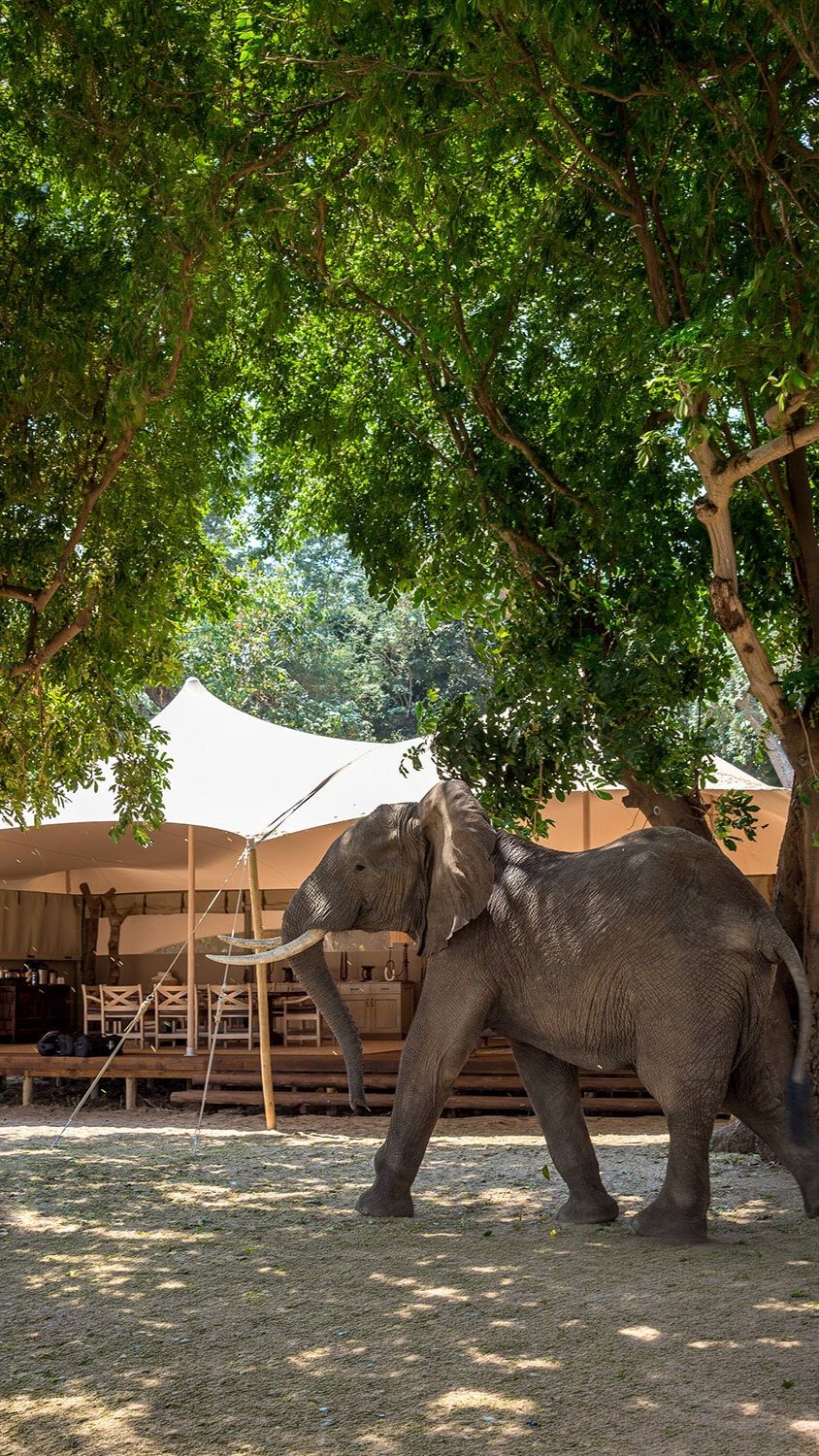
I'd call it "the elephant camp," because ellies simply rule the place. They come in for the fruit from the camp's trees, and there's a big raised teak deck outside the main mess area that they'll casually cross through mid-lunch, then meander on toward the tents. More than once we had to take the back route to our tent to avoid one of the huge beasts blocking the main path. One afternoon, while I was showering, an elephant stood maybe six feet away — if there hadn't been mesh netting between us, I could have reached out and touched him. He was utterly peaceful. Words fail to describe the feeling of such a meeting with an elephant; it simply must be experienced.
FEATURED OUTPOST
"Ellies simply rule
the place."
I asked our guide Causemore how he got his name. During the war, he told me, his father's village had to be relocated for safety, and that's where his father met his mother; nine months later, Causemore was born. It turned out his father already had a wife and children elsewhere, and when his mother explained the name, she told him: "I called you Causemore because you caused me more trouble."
We spent our days on a mix of walks, game drives, and time on the river. Trish was determined to catch a tiger fish. The first night she landed a tiny one, maybe four inches long. The next evening, we went out fishing again, and we watched as a huge herd of elephants swam across the Zambezi right in front of us, trunks up like massive snorkels, the mothers gently lifting and guiding the babies along. Watching them cross a river running that strong and that full was genuinely otherworldly. That night, Trish caught a four-pound tiger fish and was over the moon.
We became close with a lovely American woman from Los Angeles, whom I've stayed in touch with since we've both been back in the States. She was recovering from a recent loss, and this trip turned out to be deeply healing for her. It also happened to be her birthday. I'd noticed a table set for one as we headed out fishing that evening and wondered who it was for. When we found out who the table was for, I had a quiet word with the managers and asked if we could combine tables — our group, an Italian family, and the mother and son — into one big birthday celebration. The staff were thrilled; it turned out they'd been about to ask us the same thing. We ate together every night after that. These are the kinds of things that happen on safari that you don't anticipate but you may well remember forever.
I flew back to Cape Town, but Trish stayed on with our new friend from LA, and the two of them went fishing again the following night. Trish caught a fifteen-pound tiger fish — a record catch — and was invited to the Lake Kariba Tiger Fishing Championships. She was thrilled.
"Trunks up like massive snorkels, the mothers gently lifting and guiding the babies along."
Safari's End
It was such a magical stretch of travel — especially the Matobos, a place so tied to my family's story. I scattered some of my parents' ashes off a huge boulder there. I'll always go back to Kenya, where I've also lived, and South Africa, but Zimbabwe has my heart.