 By The UNCHARTED® editors · 4 min read
In April 2025, Argentina designated Patagonia Azul Provincial Park, a massive new marine sanctuary encompassing 729,000 acres of protected land and sea. Stretching across 124 miles of Atlantic coastline and more than 60 islands, it shields one of South America’s most ecologically rich marine zones from industrial overfishing and trawling.
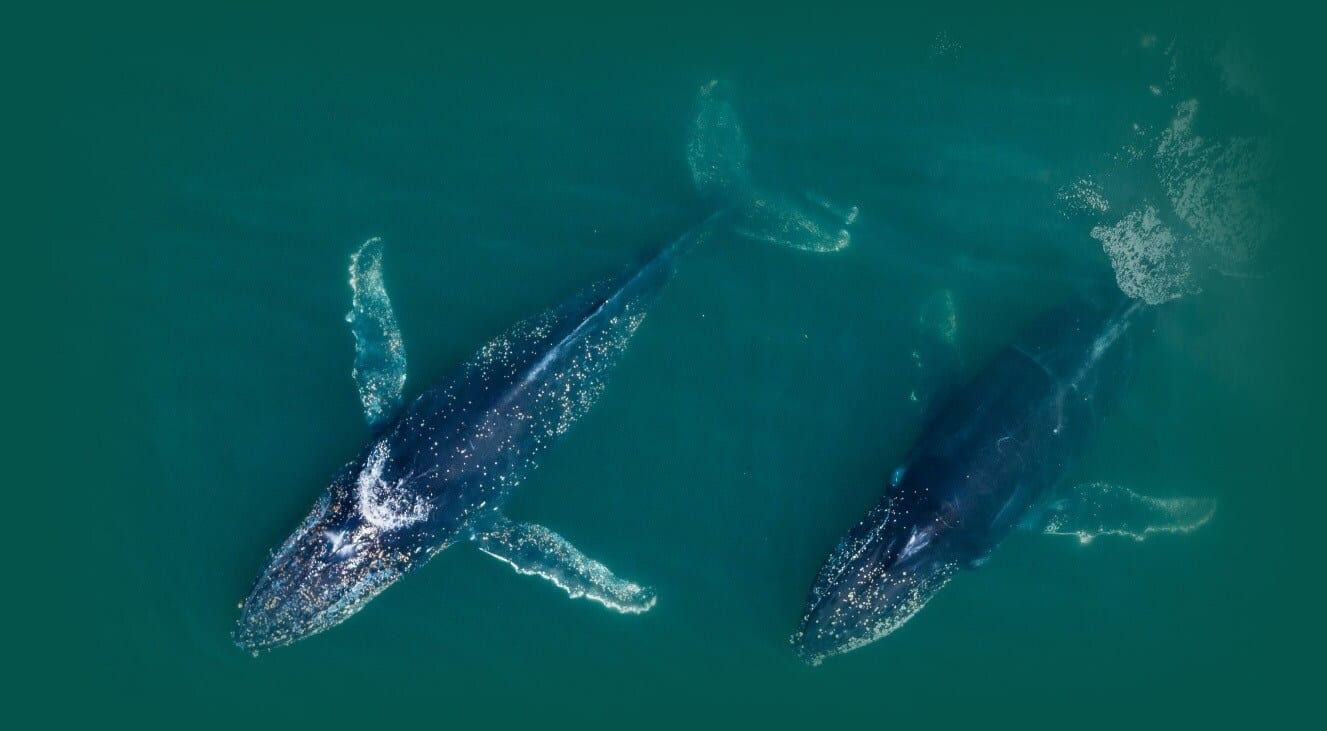
With its mix of wind-carved steppe, jagged coastlines, and nutrient-rich waters, Patagonia Azul is a haven for biodiversity. More than 50 species of seabirds nest and feed here, alongside sea lions, dolphins, and four species of migrating whales. This coastal wilderness has earned comparisons to the Galápagos, though it remains largely unknown even within Argentina.
The park’s creation was spearheaded by Fundación Rewilding Argentina, an organization born from the legacy of Tompkins Conservation, which was founded by the late North Face founder Doug Tompkins. The foundation has led efforts to restore native wildlife, establish protected areas, and support regenerative local economies across the country.
“We’re working to conserve this coast not only for nature, but also to offer meaningful experiences for people,” says María Mendizábal, a tourism specialist with Fundación Rewilding who previously worked at Bahía Bustamante Lodge, the Patagonia Azul region’s flagship ecolodge. “This is the seabird hotspot of Argentina. And the marine life here is extraordinary.”
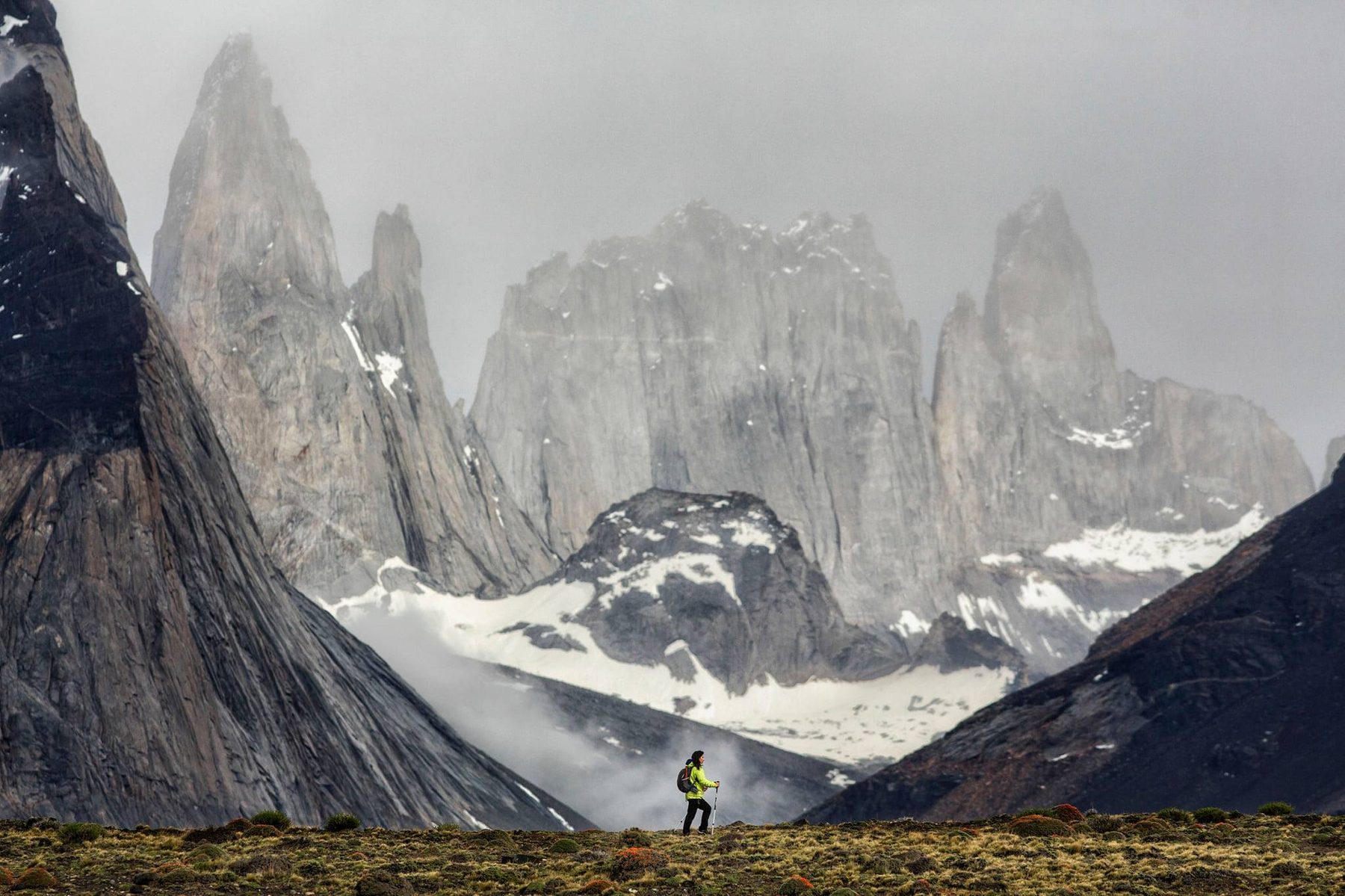
While much of Patagonia’s fame rests on its glaciers, lakes, and mountain trails, Mendizábal wants travelers to look east — to the South Atlantic sea.
“You say Patagonia to people, and they think of forests and glaciers. But we have more than 4,000 kilometers of sea in Patagonia that no one talks about,” she says.
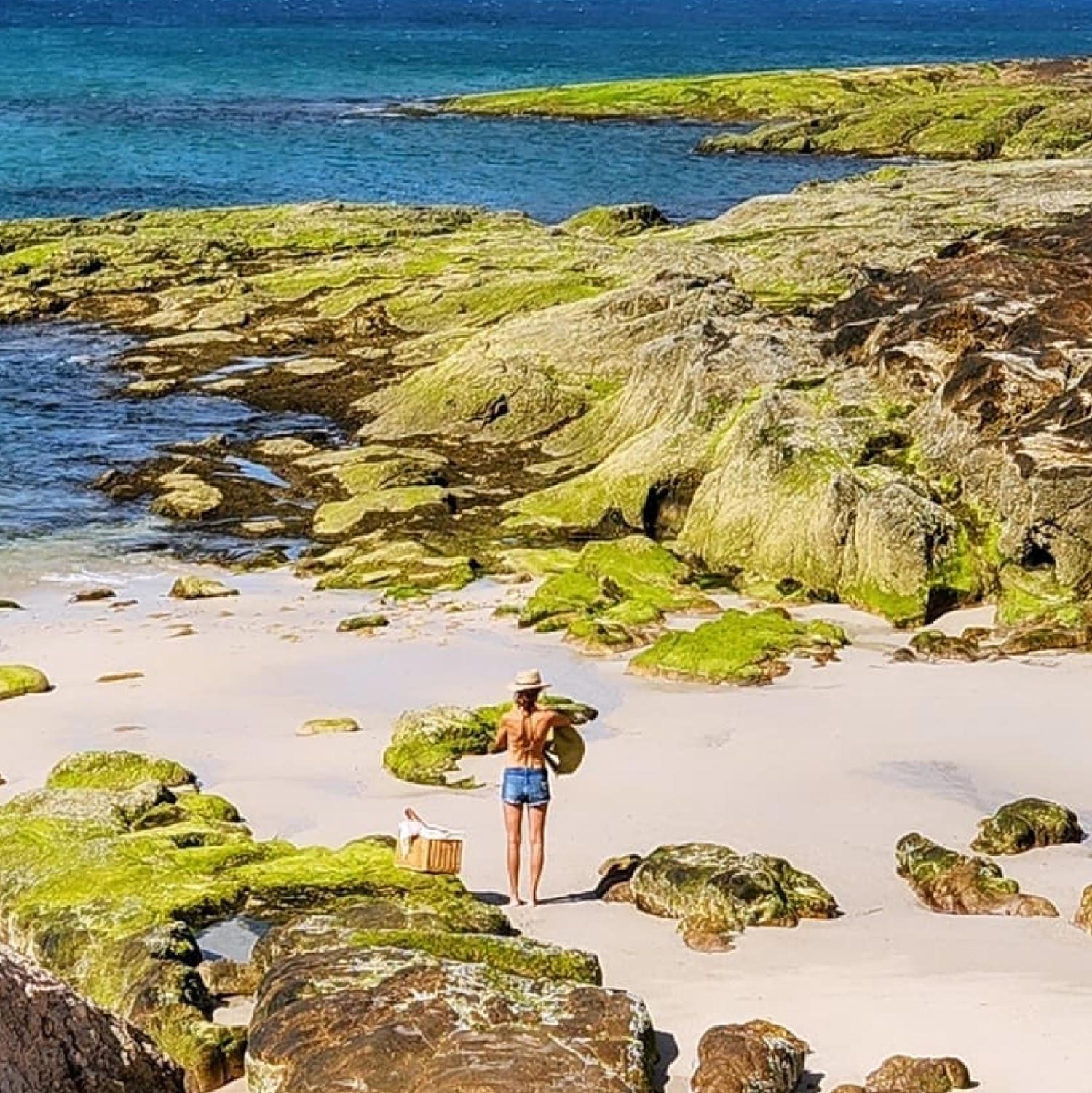
"The New York Times called the area “Argentina’s answer to the Galapagos” — but this coastal wilderness remains largely unknown even within Argentina."
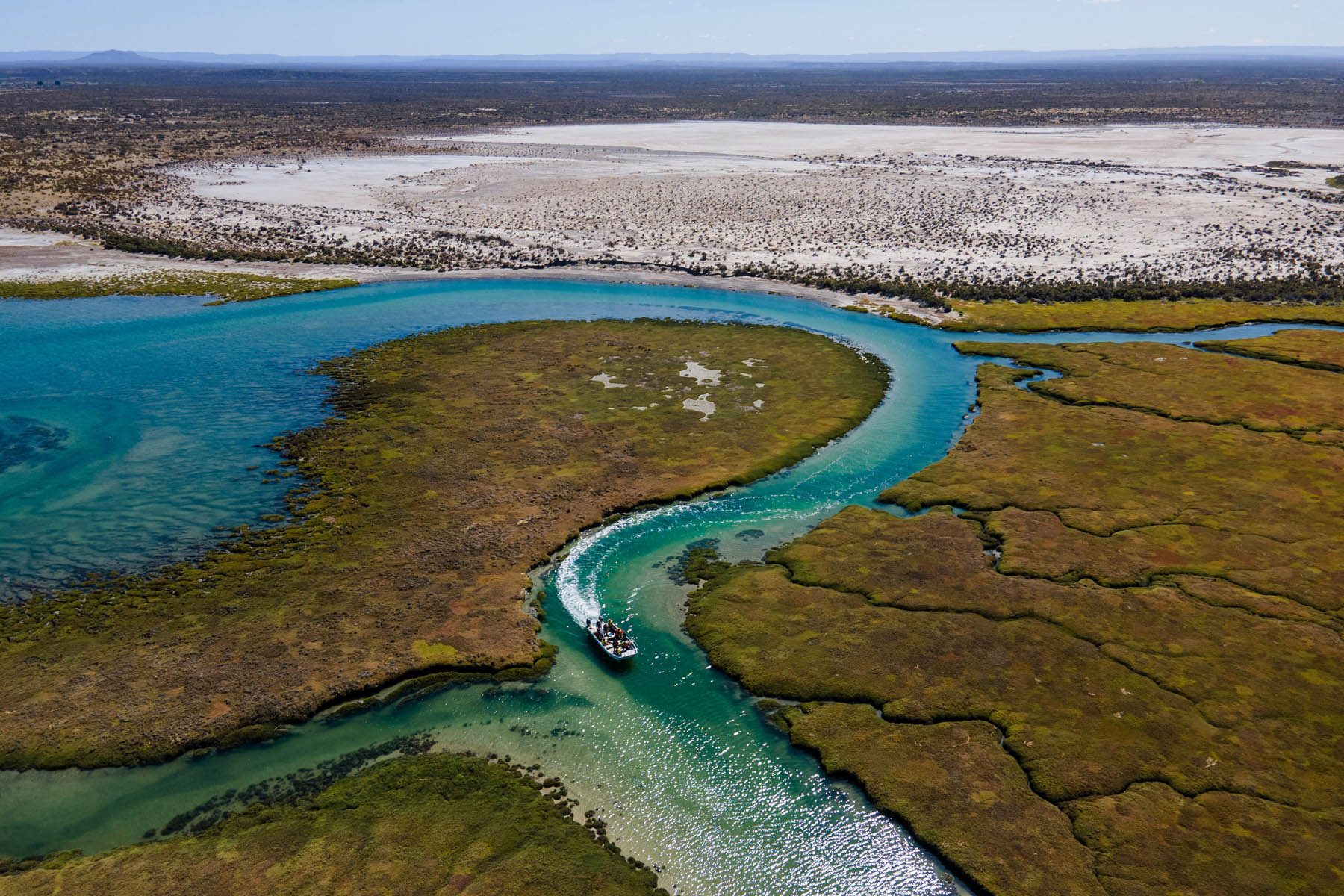
By Boat, by Land, by Air
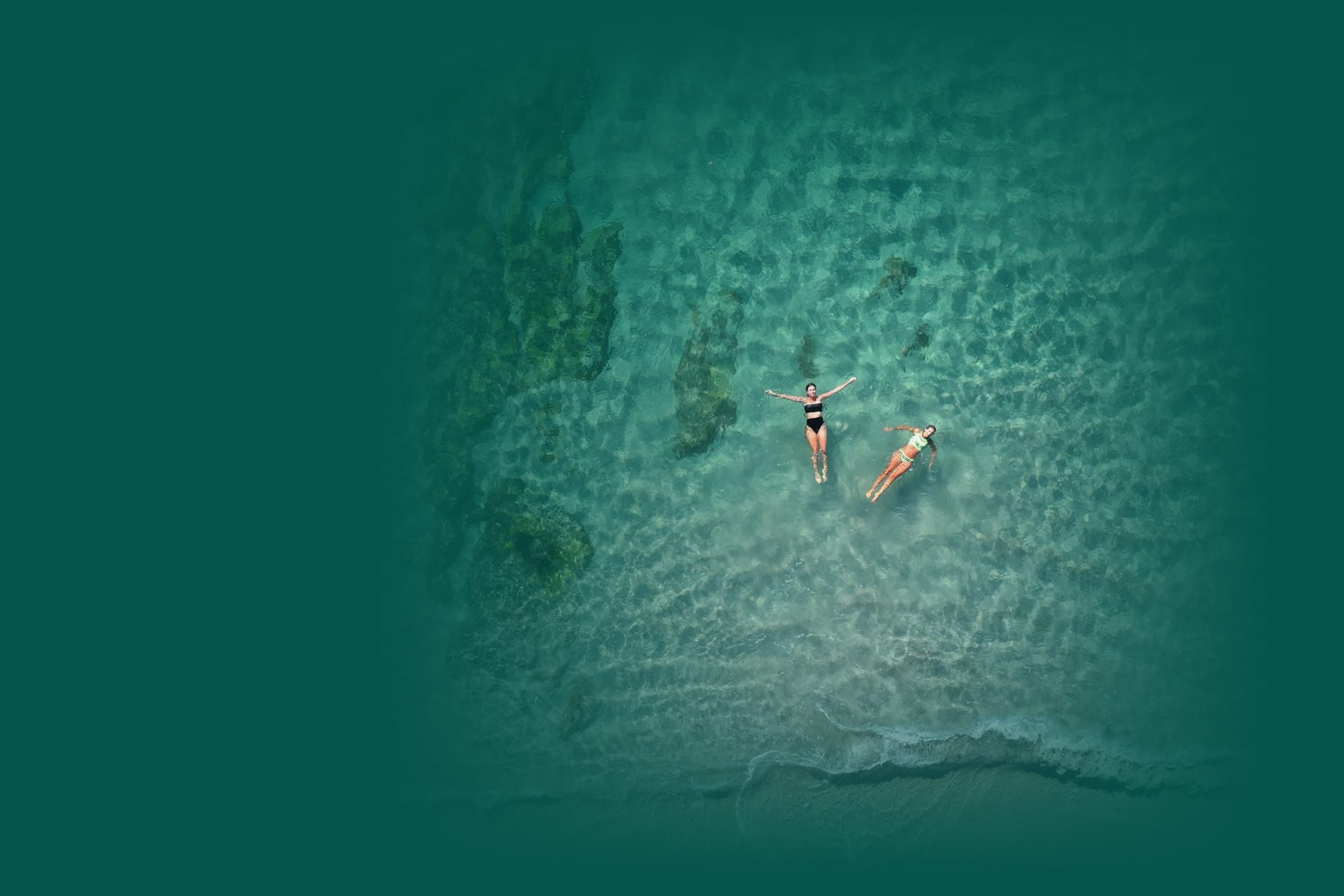
Exploring Patagonia Azul means embracing remoteness and discovery. Three primary boat trips allow visitors to venture into the coastal wilderness:
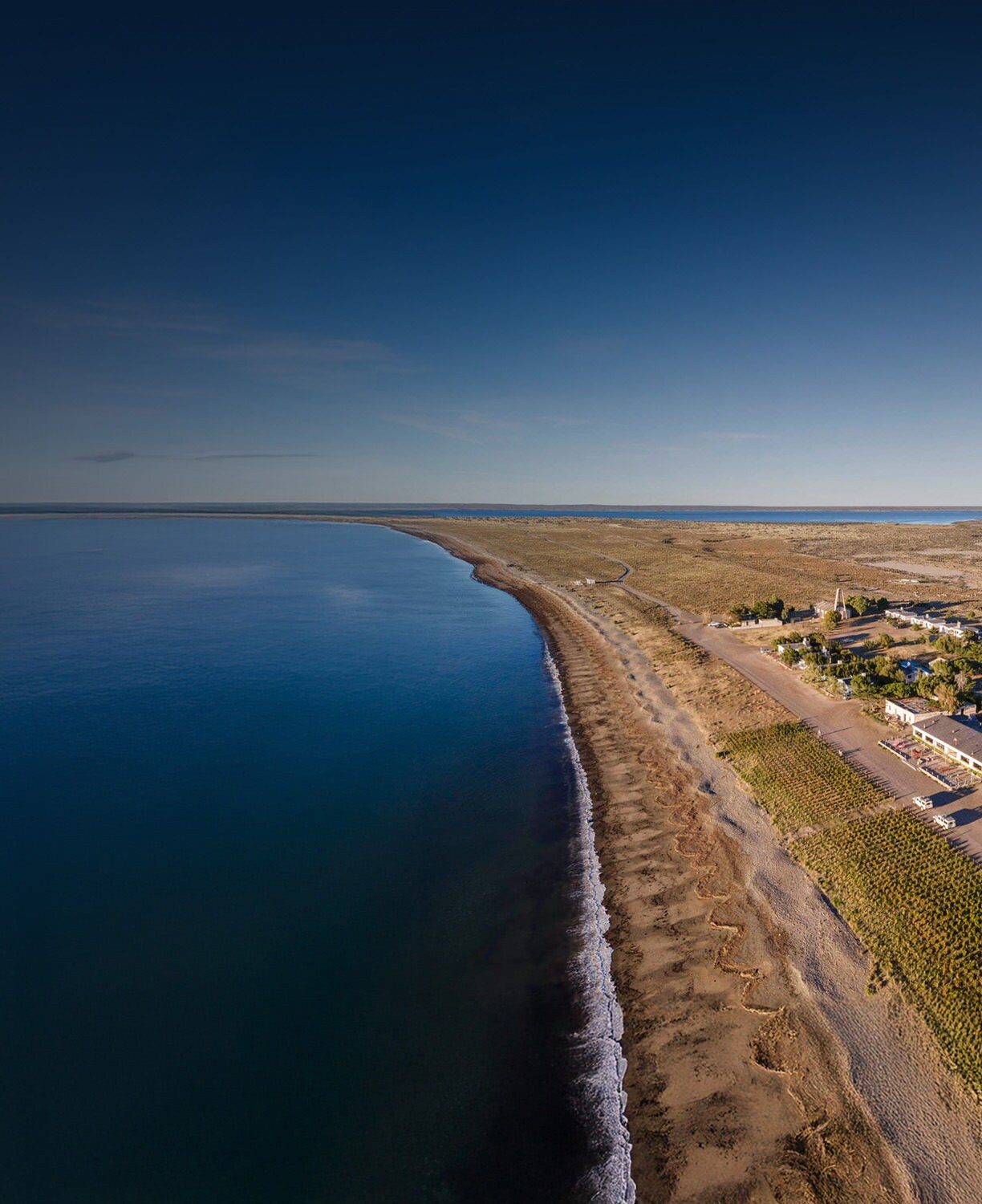
The Islas Vernaci, operated exclusively by Bahía Bustamante Lodge, offers close encounters with seabird colonies and sea lions from the deck of a private, expedition-style boat.
The Isla Leones ventures into the open Atlantic, weaving through island chains where Commerson’s dolphins, penguins, and dozens of bird species make regular appearances. Seasonal sightings of southern right, humpback, minke, and sei whales make this trip a highlight. Guests disembark at the island of Leones, home to an abandoned UNESCO-listed lighthouse and protected bird nesting grounds.
The Islas Blancas excursion takes a shorter route past sea lion and cormorant colonies, with frequent dolphin sightings en route.
All trips are small-scale, managed by local guides and national park personnel. “There’s no one else out there,” Mendizábal notes. “It’s not just the ocean—it’s the feeling of being completely alone with nature.”
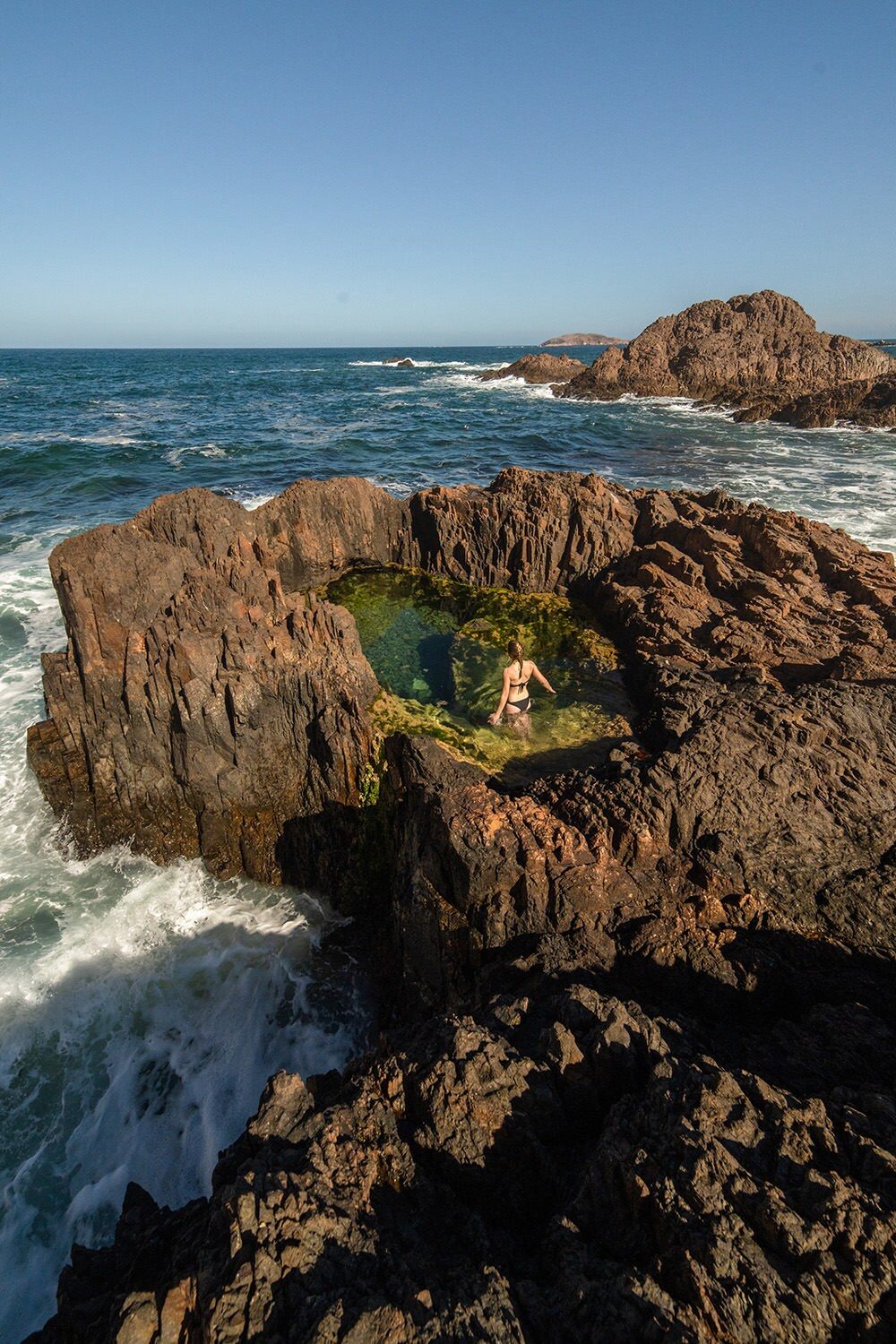
“It’s not just the ocean—it’s the feeling of being completely alone with nature.”
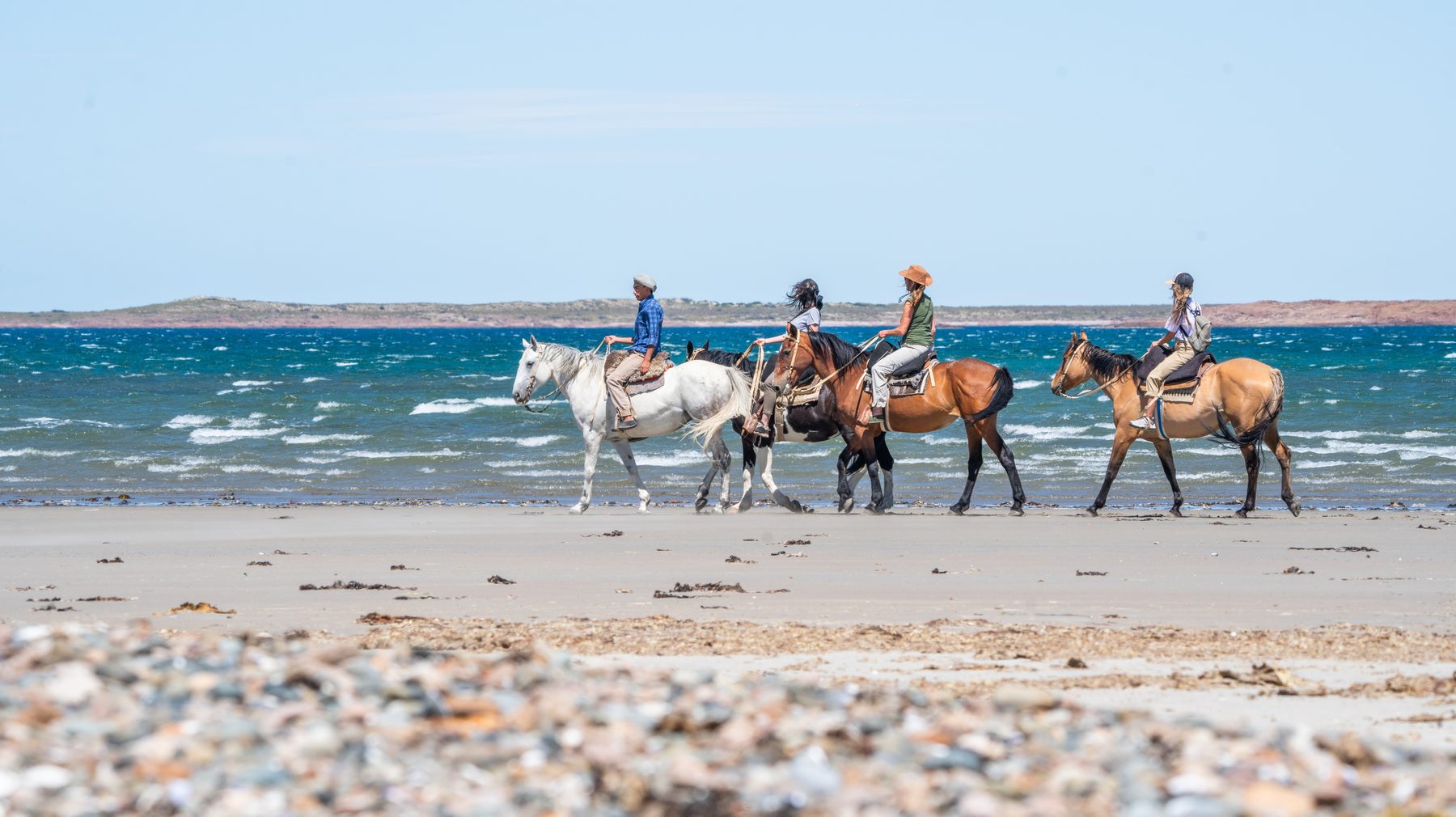
Bahía Bustamante: Patagonia’s Coastal Safari Lodge
At the heart of this wild coastline lies Bahía Bustamante Lodge, a seaweed harvesting camp and sheep ranch that became an ecolodge nearly two decades ago. Still family-owned, the lodge combines simple elegance with exclusive access to some of the region’s most beautiful habitats.
With a private guide and Land Rover by your side, days begin without an agenda and unfold depending on the tides and wind. One day might bring a boat trip to Islas Vernaci; the next, a walk through a petrified forest, a visit to a penguin colony accessible only at low tide, or a rugged drive to the beaches of Peninsula Graviña. Overland safaris often reveal guanacos, rheas, Patagonian foxes, and dozens of seabird species.
Farther north, Isla Leones Camp — a newer, more rustic operation — extends the adventure with whale-watching, dolphin encounters, and isolated beach exploration. Together, these lodges provide a blueprint for low-impact nature tourism in the park.
“We’re expanding the map,” Mendizábal explains. “Bahía Bustamante is the high-end hub, but now we’re offering more accommodations to complement it. The idea is to support the destination as a whole.”
Getting There
It’s easier than many travelers realize to include the coast in a broader Argentina itinerary without having to hub in and out of Buenos Aires, says Mendizábal. “From Trelew, at the northern edge of Patagonia Azul, you can fly directly to El Calafate to see the glaciers or to Ushuaia, at the end of the world,” she explains. “It’s perfect for a triple-destination trip without going back to Buenos Aires.”
Travelers can combine other iconic regions, as well: Iguazú Falls and the Iberá wetlands in the north, Bariloche and the Andean lake district, or Chile’s Futaleufú River just across the border for rafting, fly fishing, and trekking.
“So it’s not only Bariloche or Iguazú or the glaciers,” Mendizábal adds. “Argentina is a really big country.”
Patagonia Azul:
A Wilder Kind of Calm
TRIP REPORT
Just Back From Safari at the Coolest Camp in the Galápagos
Our Favorite Hacienda Hideaways & Estancias
Ecuador: ‘Latin America in a Nutshell’
Journey through Southern Peru and Beyond