 By The UNCHARTED® editors · 5 min read
Camps We Love
The Art of
Wonders unfold across Botswana’s remarkable landscapes, where the arid Kalahari gives way to the channels of the Okavango Delta, and the shimmering salt pans of Makgadikgadi stretch to the horizon. Each locale features a safari camp as uniquely adapted to its particular environment as the wildlife that thrives there.
The lush floodplains of the Okavango Delta flash to the mind’s eye at the thought of Botswana, but beyond the well-known wetland lies a tapestry of habitats and experiences that broaden the boundaries of the traditional safari. These six standout camps — set in both iconic and lesser-known regions — offer fresh impressions of Botswana, rooted in conservation, culture, and immersive design.
Zarafa Camp: Safari in the Intimate
SELINDA RESERVE, BOTSWANA
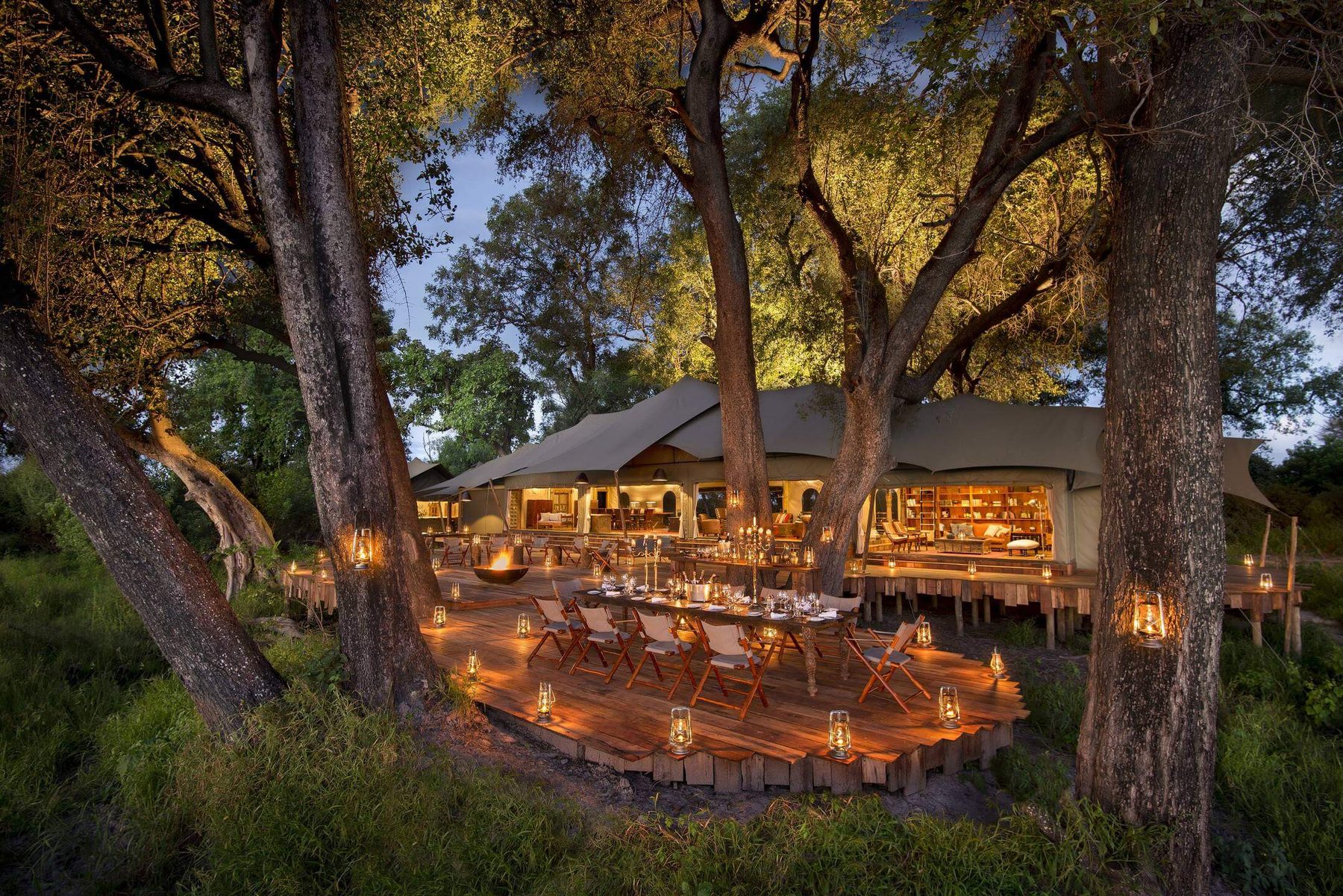
The Selinda Reserve, a sweeping 350,000-acre wilderness corridor connecting the Linyanti and Chobe river systems to the Okavango Delta, is one of Botswana's most biodiverse and least-visited stretches of wild. Zarafa Camp rises from it with quiet confidence. Founded by Great Plains Conservation — the team behind the reserve's dramatic rewilding — the camp takes its name from the Arabic word for giraffe, a nod to the elegant giants that roam freely outside its tented suites.
But the giraffe are just the beginning. The Selinda corridor is home to one of Africa's densest elephant populations, thriving lion prides, leopards, wild dogs, and seasonal migrations that rival the Serengeti. On the water, the Zibadianja Lagoon delivers hippos, crocodiles, and extraordinary birdlife at close range. Zarafa's dhow — a traditional wooden boat — is one of the only ways to experience it.
Rebuilt and reimagined by Great Plains, Zarafa is also a living testament to what conservation tourism can achieve: a place where the wild has genuinely come back from the brink, and where every visit directly funds the effort to keep it that way.
Sitatunga Island: The Delta, Distilled
OKAVANGO DELTA, BOTSWANA
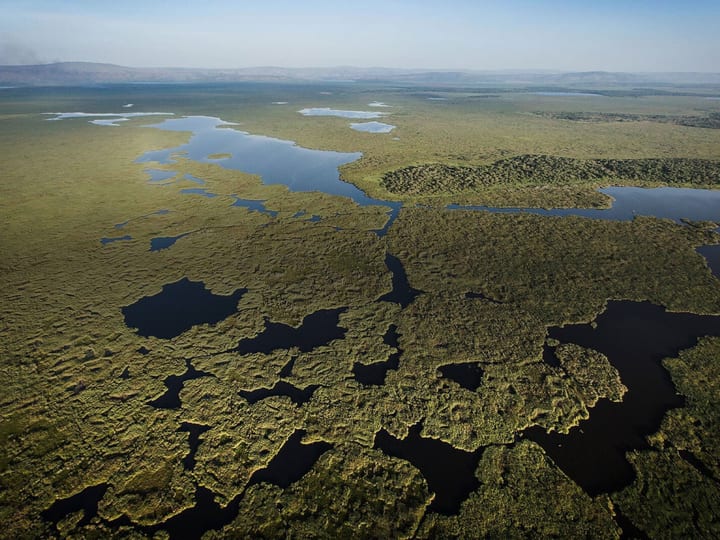
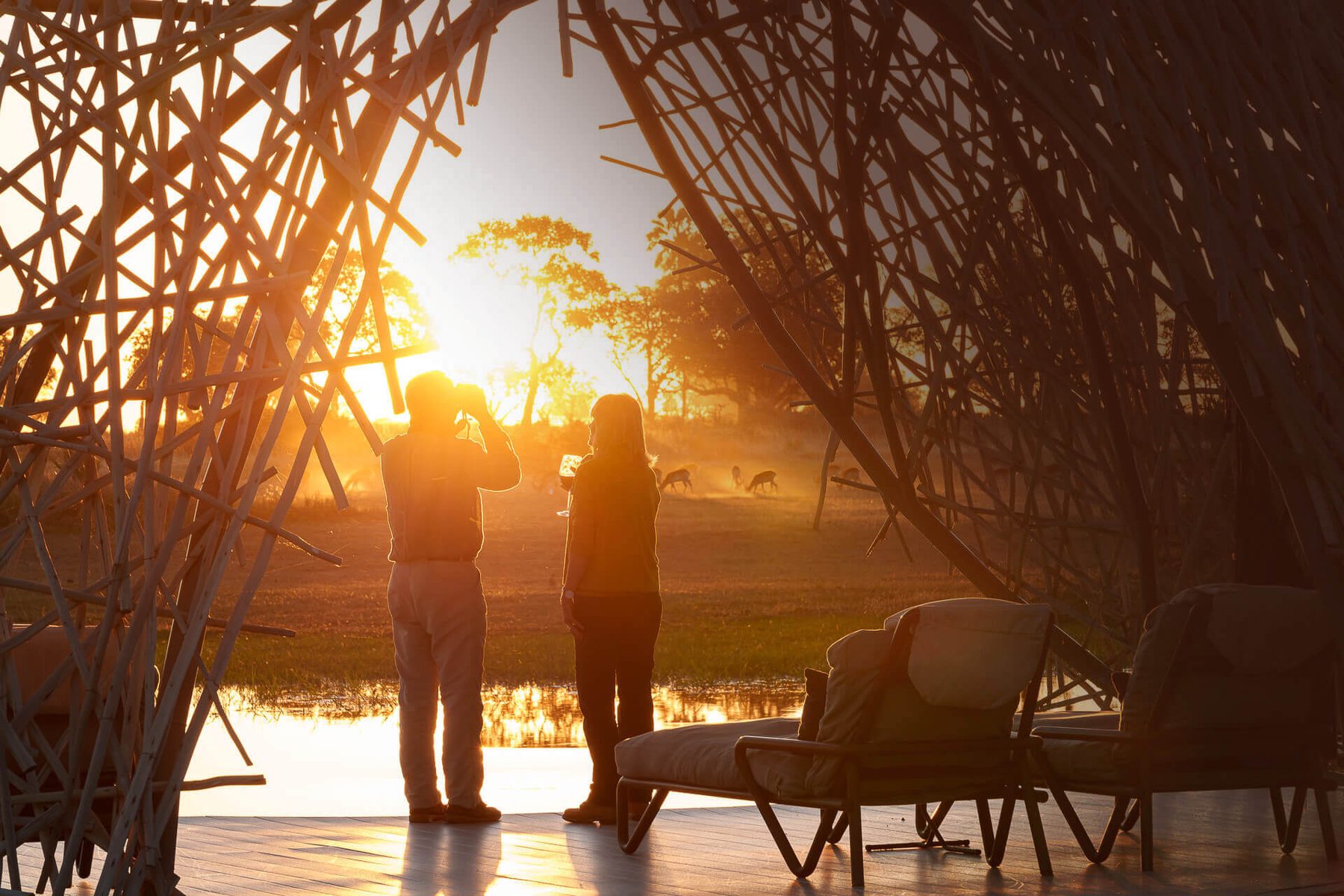
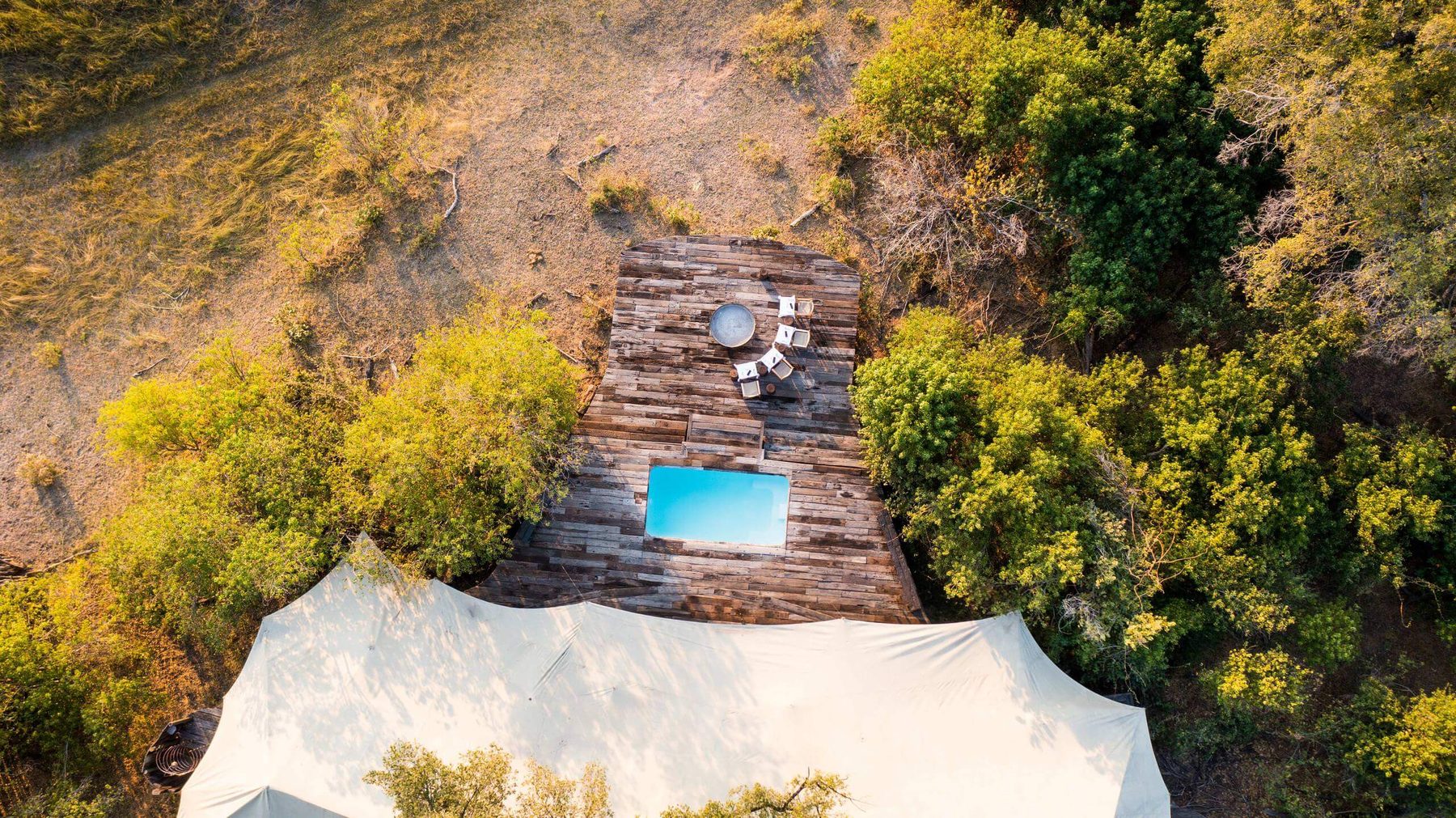
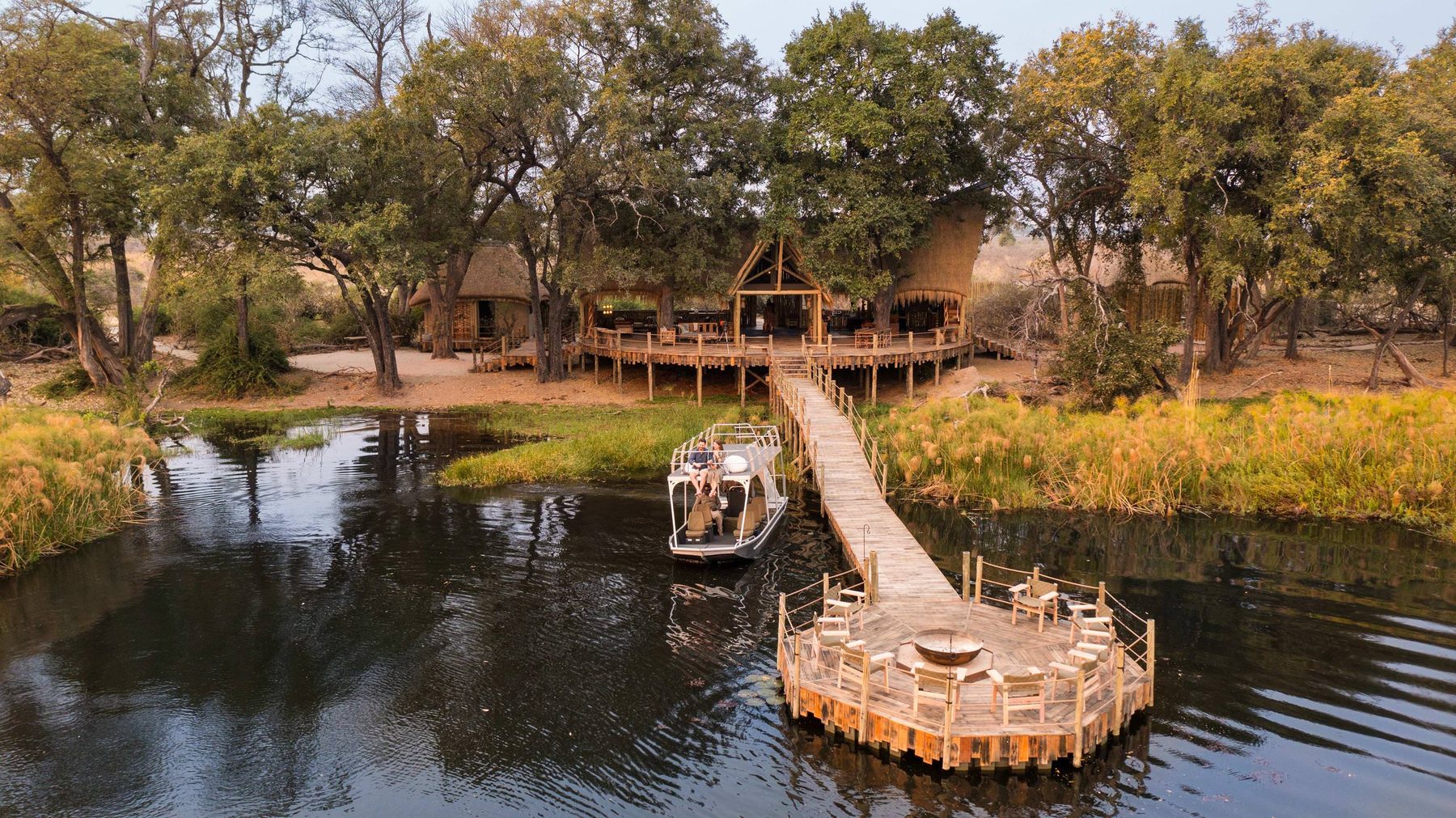
This little gem is the Delta’s undiscovered piece of paradise. Accessible only by boat or helicopter, deeply private and wild Sitatunga Island offers a gloriously intimate experience, with just three tents nestled high in ebony trees. The tents resemble baskets shaped like giant fishing traps, paying homage to local fishing traditions.
With abundant waterways and lush vegetation, Sitatunga is a sanctuary for diverse marsh-adapted aquatic wildlife. Take the namesake sitatunga — elusive antelopes with caramel coats and large antlers, uniquely adapted to swamp life with elongated hooves. “An impossible animal, really,” says Derek Joubert, who designed the camp with wife Beverly. Staying here means witnessing these rare creatures up close, alongside water buffalo, hippos, crocodiles, and a rich variety of birdlife.
Selinda Explorers Camp: Walking a Wilder Path
Selinda Spillway, BOTSWANA
Yet another masterpiece from Beverly and Derek Joubert, this Outpost feels like a “1930s African family safari expedition camp you might have set up while collecting butterflies or dreaming up Latin names for new species you diligently catalogued in your field journal,” says Derek.
Once a depleted hunting concession with only two lions remaining, Selinda Reserve has been transformed. Location is everything here: The Selinda Spillway, a wildlife-rich corridor connecting the northern Okavango Delta to the Linyanti and Chobe River systems, supports vital and vibrant migrations —- at peak dry season, over 9,000 elephants traverse this territory. This is also prime predator country, home to lions, leopards, and cheetahs.
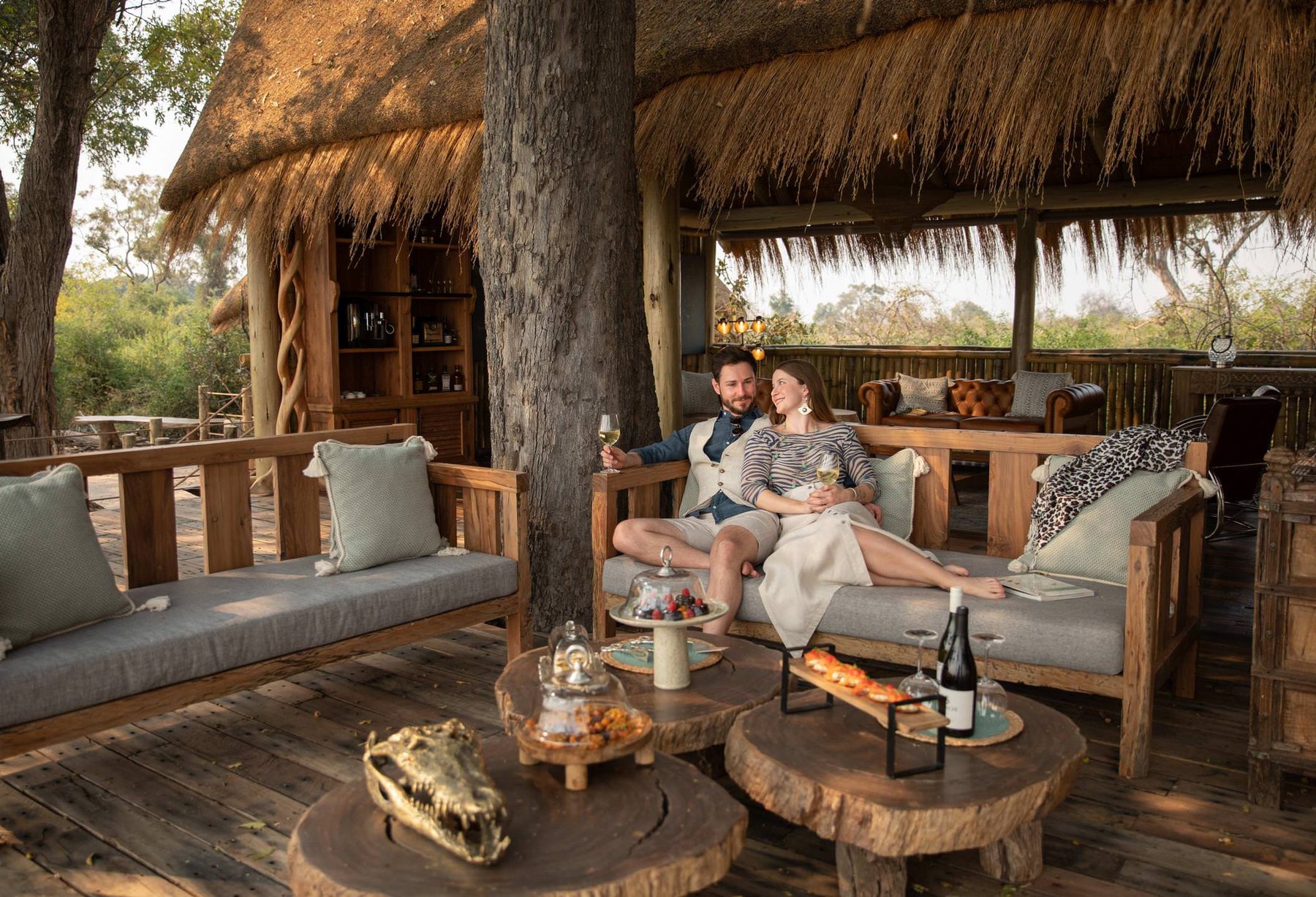
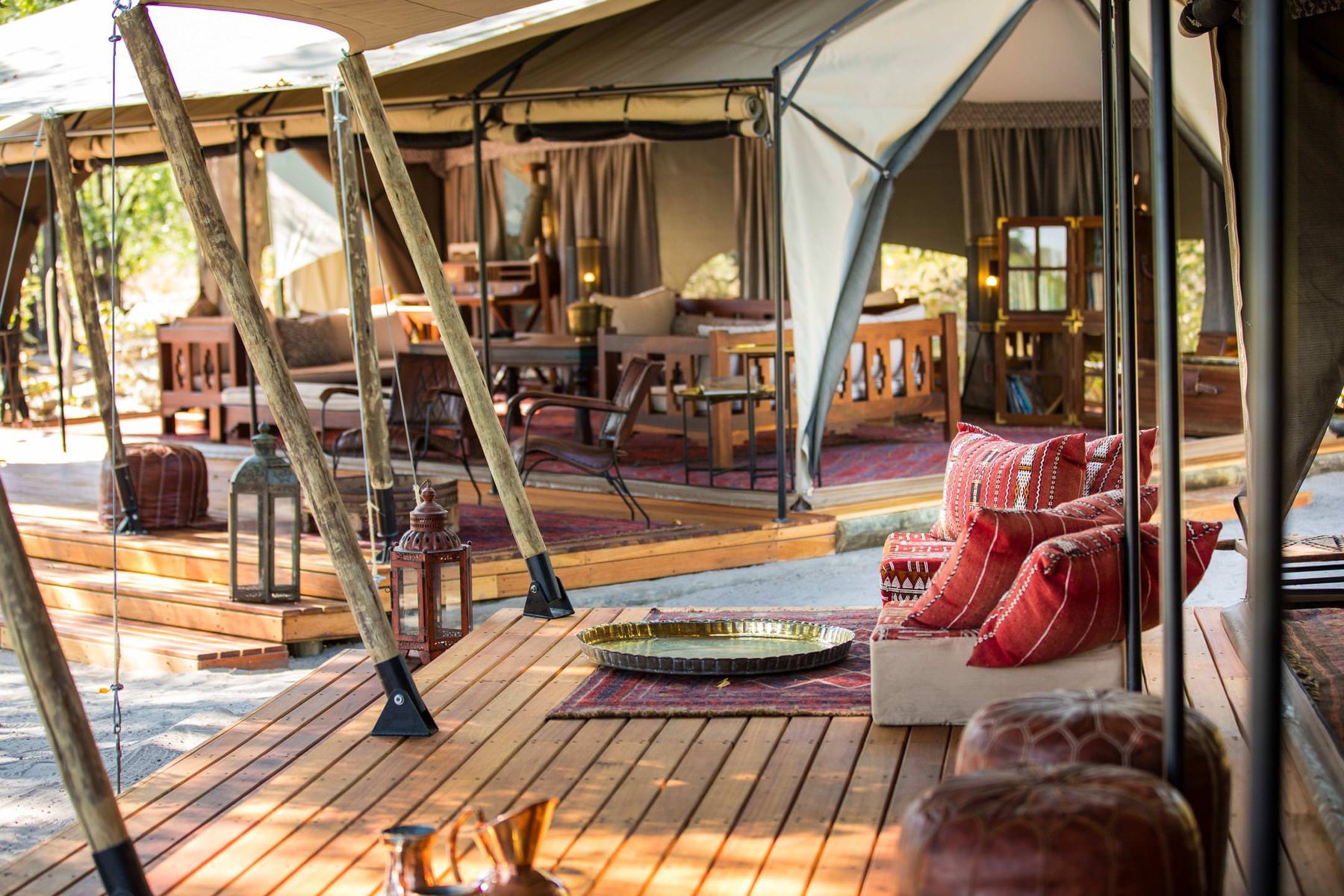
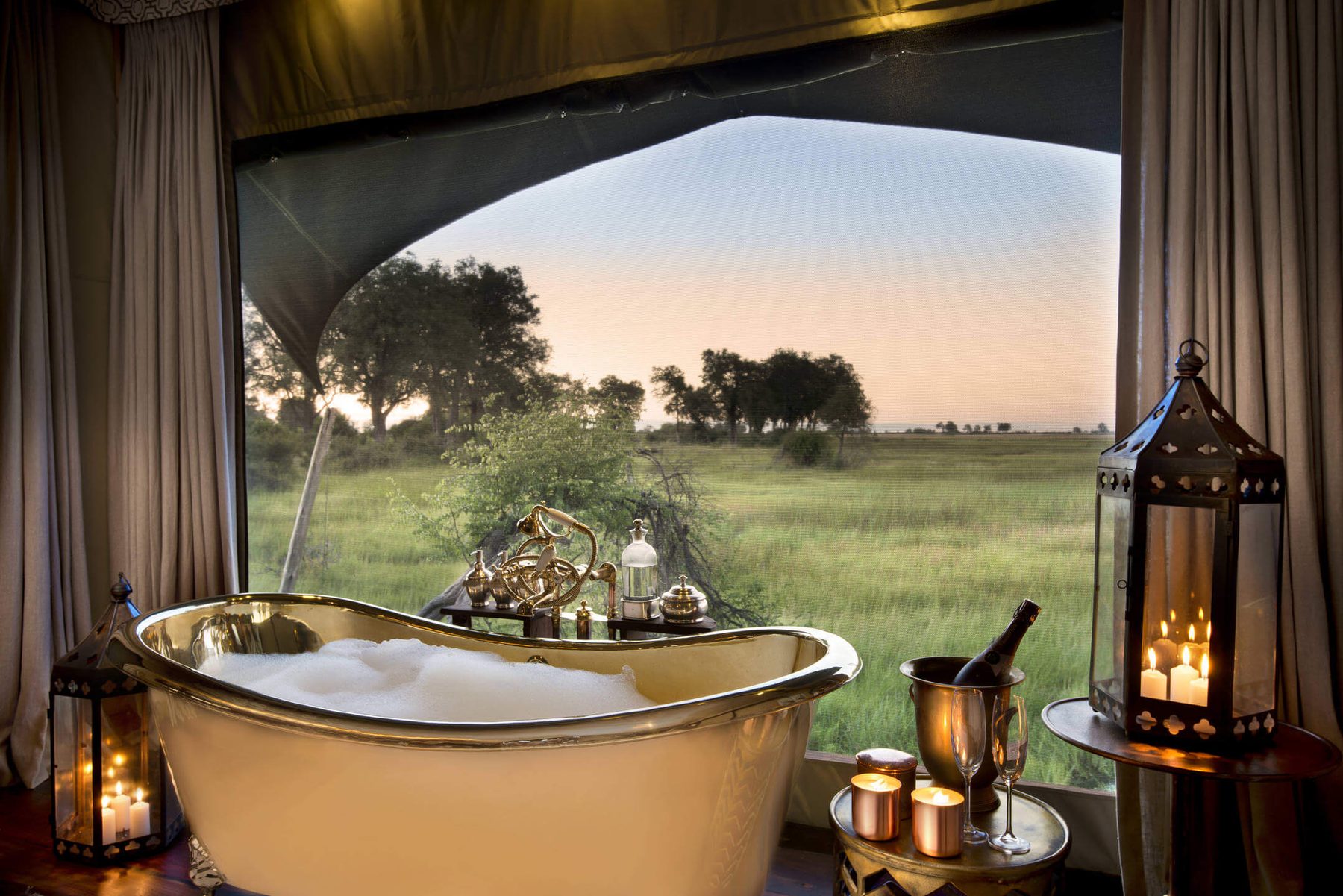
Though designed for minimal environmental impact, the camp’s tents deliver rustic safari glam with reupholstered vintage leather couches, copper accents, Persian carpets, and ensuite al fresco showers creating an atmosphere that channels the spirit of explorers from days gone by.
Duba Plains Camp: Safari in the Untamed
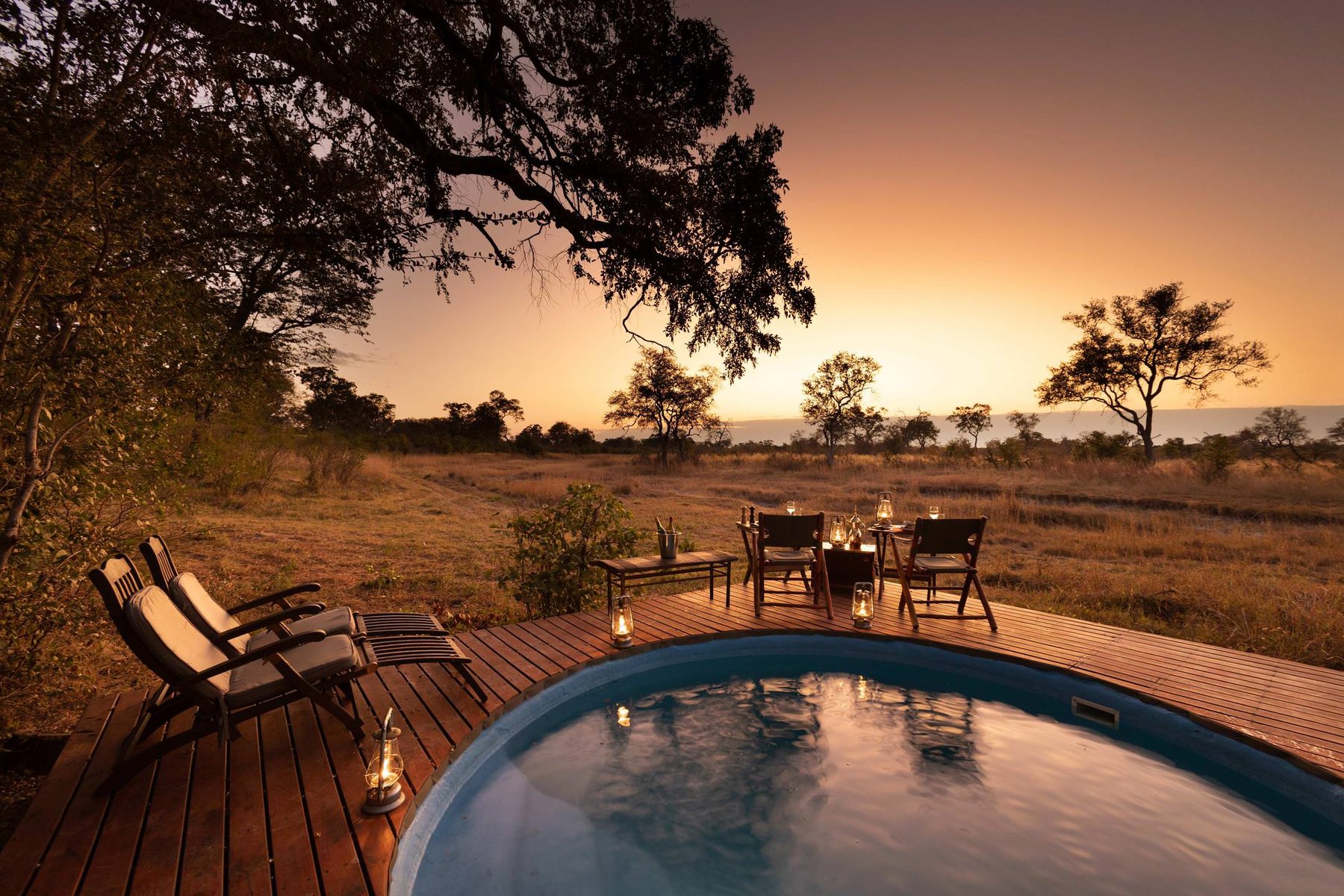
Duba Plains, a remote island deep in Botswana's Okavango Delta, floods almost entirely each year — which is exactly what makes it extraordinary. Accessible only by light aircraft, this isolated, seasonally submerged wilderness has been the backdrop for some of Beverly and Dereck Joubert's most celebrated National Geographic films, including the legendary Relentless Enemies, which documented the primal, ongoing battle between Duba's buffalo herds and its formidable lion prides.
And that drama hasn't dimmed. Duba remains one of Africa's most reliable destinations for raw, unscripted predator-prey action — the kind that unfolds slowly, then all at once. The island's unique flooding cycle concentrates wildlife in extraordinary ways, drawing lion, leopard, elephant, and massive herds of red lechwe through shallow, glittering floodwaters.
Jao Camp: Feast on the Unexplored
Perched on a remote island, this hideout immerses you in the heart of an African oasis — especially during boating safaris and mokoro excursions, where dugout canoes glide silently through reed-lined channels for intimate wildlife encounters.
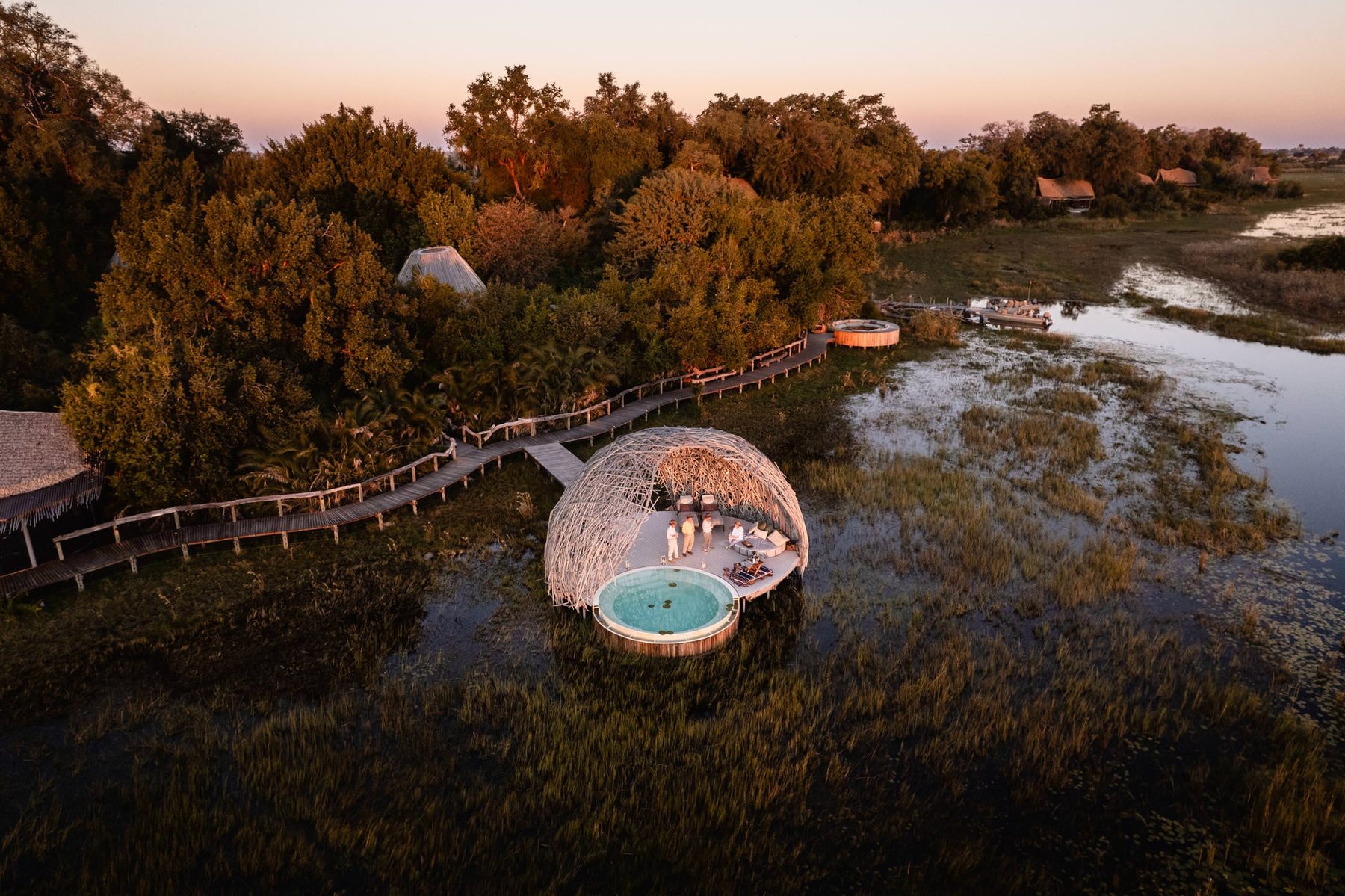
Jao Camp is a dreamscape of stilts and thatch, with suites fusing Balinese and African tribal design hovering above the reeds. Elevated walkways thread through the surrounding forest canopy, and the Okavango Delta’s vast floodplains spill out as far as the eye can see. Don’t be surprised to see an elephant wading through the river next to your window. A giraffe skeleton is the focal point of the camp’s museum, and it makes for an introduction as grand as the camp itself.
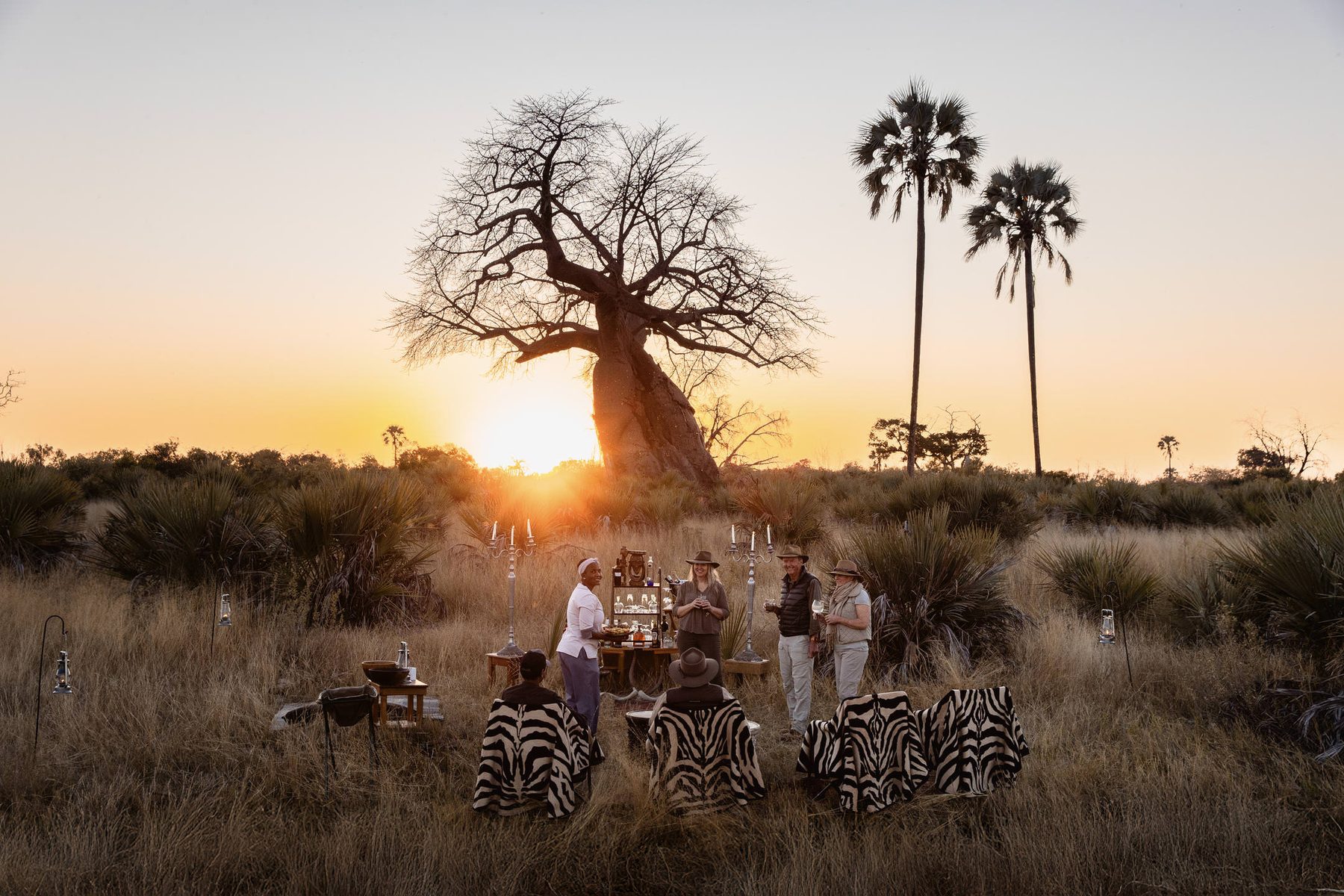
Khwai Lediba: Not Your Typical Game Reserve
Moremi Game Reserve, BOTSWANA
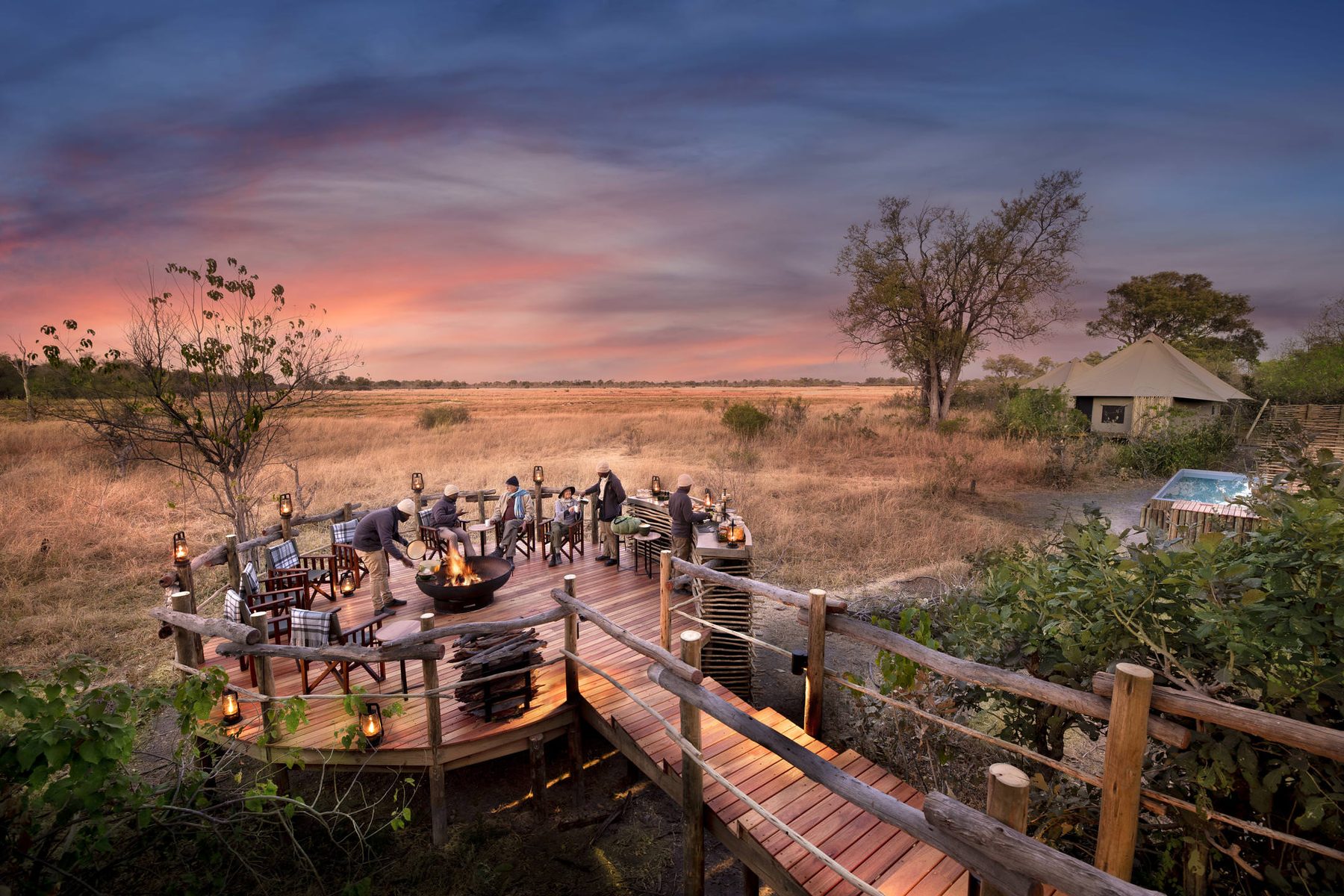
Khwai Lediba blends seamlessly into a backdrop of golden grasslands, mopane woodlands, and sunken lagoons, and this Outpost opens the door to one of Botswana’s most intricate and lesser-known ecosystems, far from the more traveled routes.
But what truly sets this spot apart is its back story: Moremi Game Reserve is the first wildlife sanctuary in Africa established by an Indigenous community on ancestral land. Founded in 1963 by the BaTawana people, it was a visionary act of conservation led by Chief Moremi’s widow, Elizabeth, to halt the decline of wildlife due to unchecked hunting and encroachment.