 By The UNCHARTED® editors · 4 min read
Over the first ten years that South African award-winning filmmakers and photographers Beverly and Dereck Joubert worked in Botswana’s Selinda area, they watched it become desperately stripped of wildlife, thanks to it being used as a private hunting concession.
The remaining elephants would appear at watering holes for only seconds at a time, before scattering back into the bush, afraid of being shot. The number of big cats had dwindled to just two: a lioness and her cub, who struggled to survive.
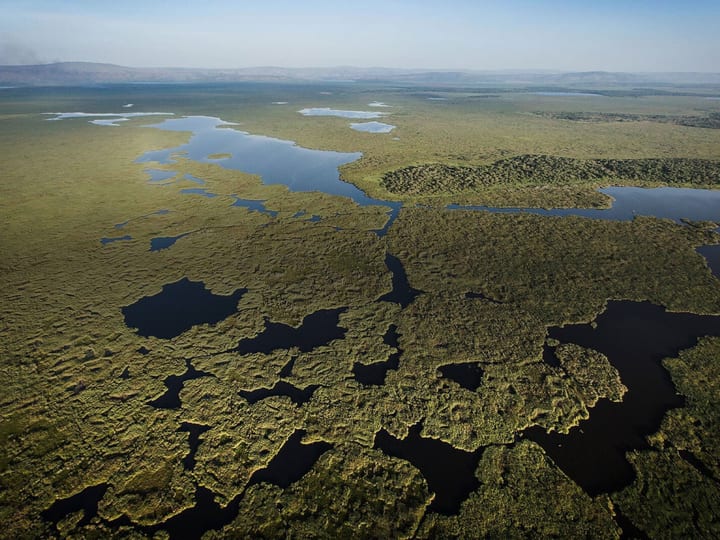
It had become a wasteland, and the hunters who owned it knew it — they even approached the Jouberts themselves, asking them if they’d be interested in purchasing the plains. The couple took on the challenge of bringing the ecosystem back from the brink, and, twenty years later, the Selinda reserve spreads across 360,000 acres — roughly the size of Kenya’s Masai Mara — and is an important migration corridor between the Linyati and Chobe river areas and the
. The population of elephants is now one of the densest in the world, and several lion prides rule the region.
Okavango Delta
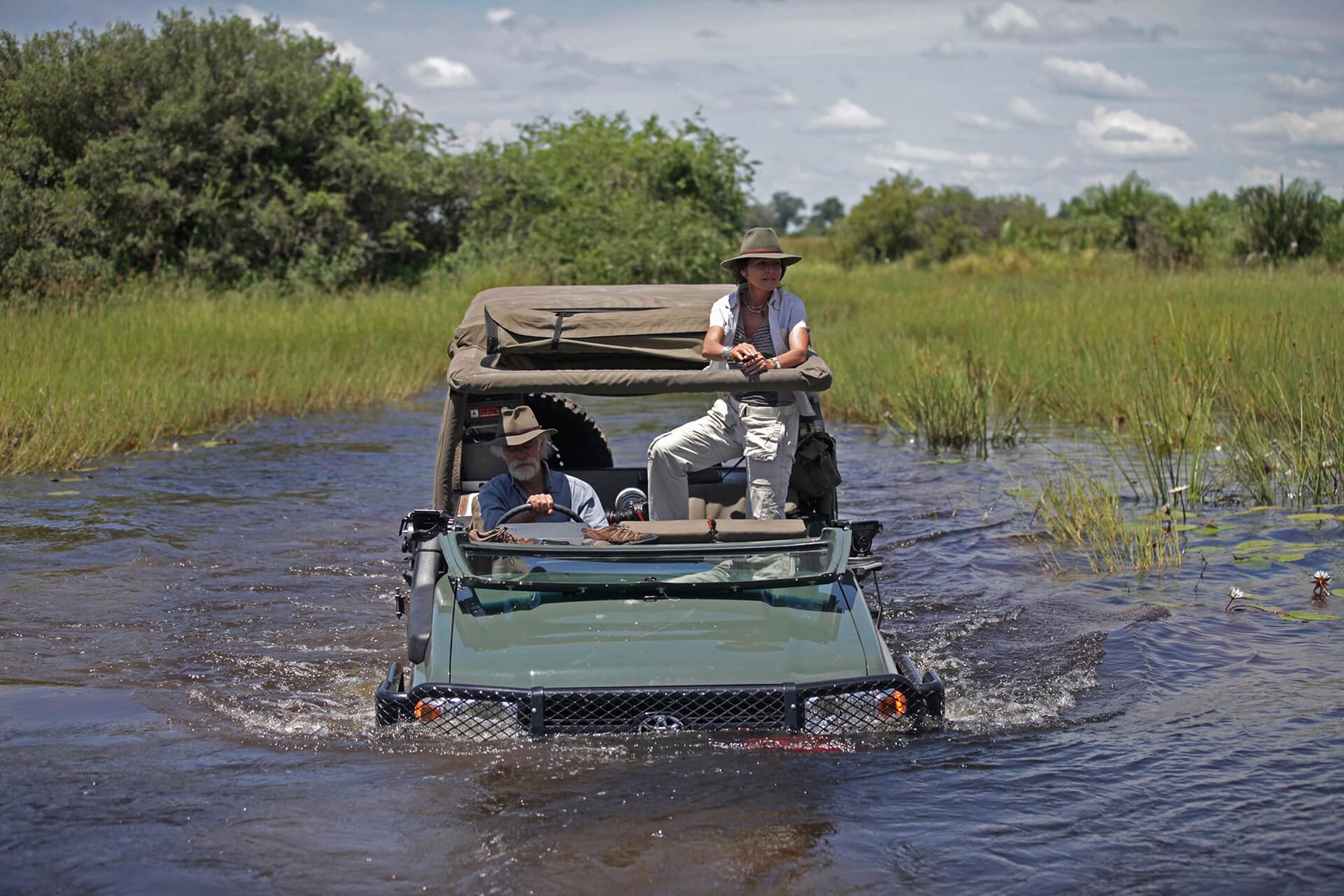
"They started sharing their love of the lens with guests, providing high-end Canon cameras and skilled guides trained in photography."
But this great rewilding didn’t happen overnight. First, they left the animals alone and let nature do its thing. “Wildlife was running scared and hiding,” says Dereck. They needed to learn they could trust humans again. “Now, you can find a herd of elephants and drive amongst them, mothers and babies, and they are completely calm.”
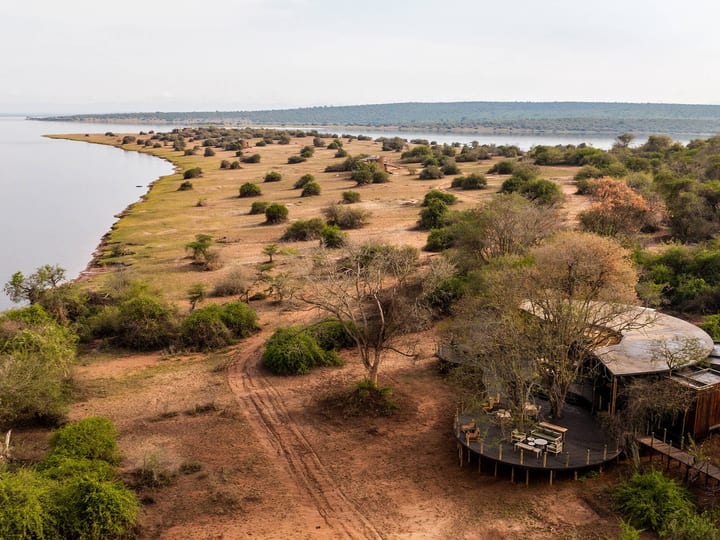
Second, they set up Selinda Camp, the first in their now flourishing Great Plains camp collection. “We gauge our success on whether we can convert land to protection, as opposed to simply running ecotourism [lodges],” Dereck continues.
Next, the power couple established the Great Plains Conservation foundation, and began purchasing degraded land across
Botswana
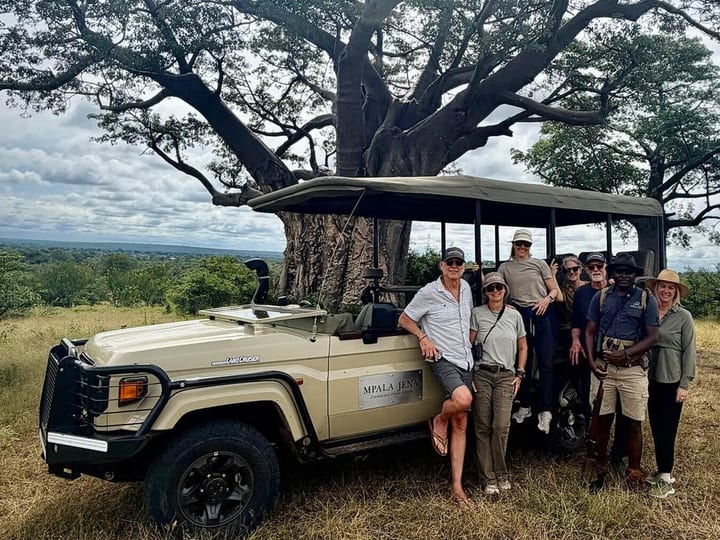
. They started sharing their love of the lens with guests, providing high-end Canon cameras and skilled guides trained in photography. Travelers went out in safari vehicles to snap and shoot — an entirely different kind of shooting from just a few years before.
,
Zimbabwe
, and even into
Kenya
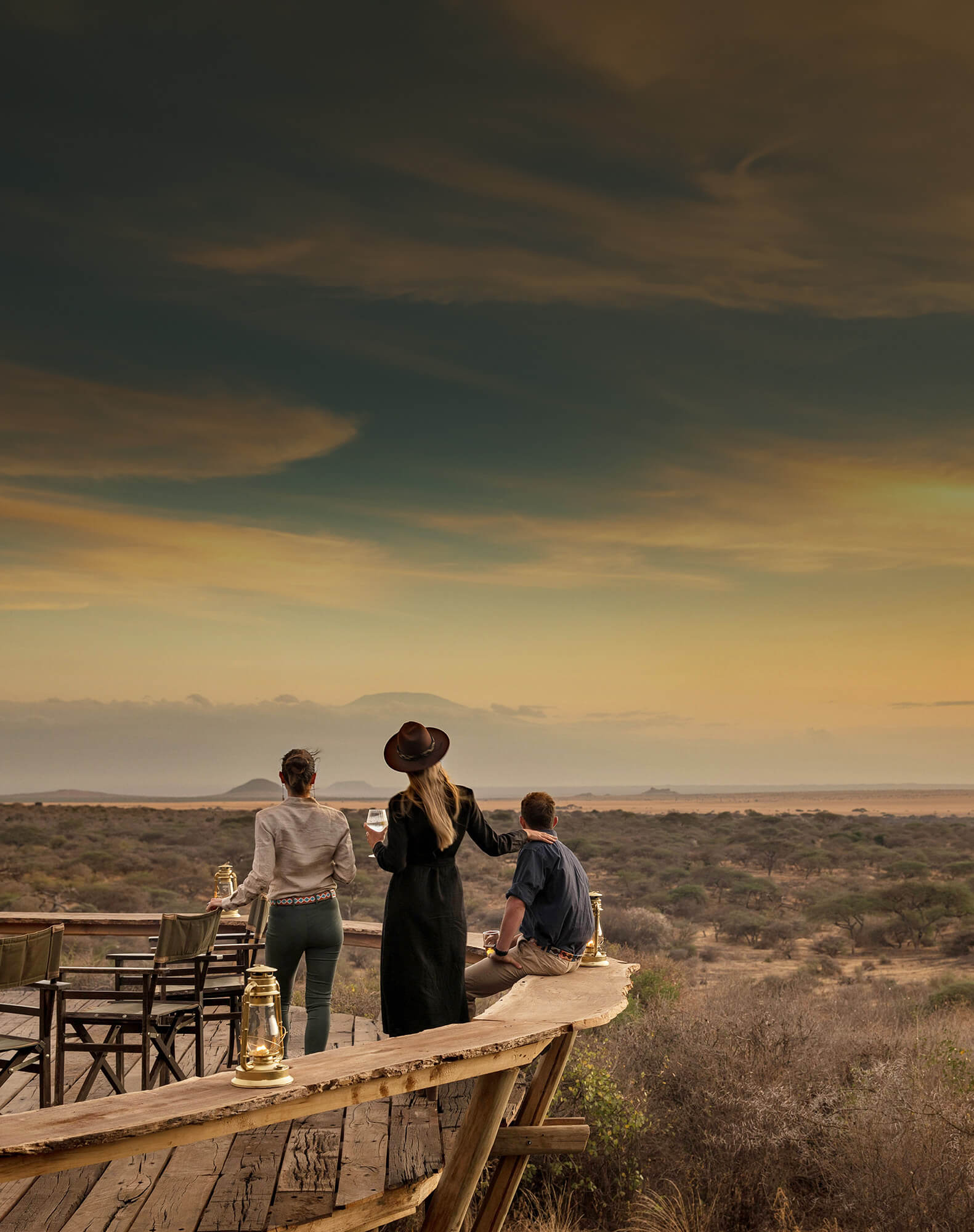
FEATURED OUTPOST

To this day, Great Plains outposts are singular amongst African camps in offering these amenities.
Moreover, at Selinda and camps like
in Zimbabwe’s Sapi Reserve — another concession revived from a “sea of dead animal bones” to a protected safari destination — hunting hides became photographic hides where visitors could hunker down around watering holes and watch wildlife wander by, capturing pictures.
Tembo Plains
"Safari in Hemingway's Green Hills of East Africa."
Even if you’re a seasoned photographer, it’s a relief to know that there’s no need to lug your equipment across the world. Yet, “I think photography is an intellectual extension of one's experience today, and you don't have to distinguish between being a photographer or not a photographer,” says Dereck, when asked about opportunities for the more amateur shutterbug. “It's now so ingrained and a part of our lives.”
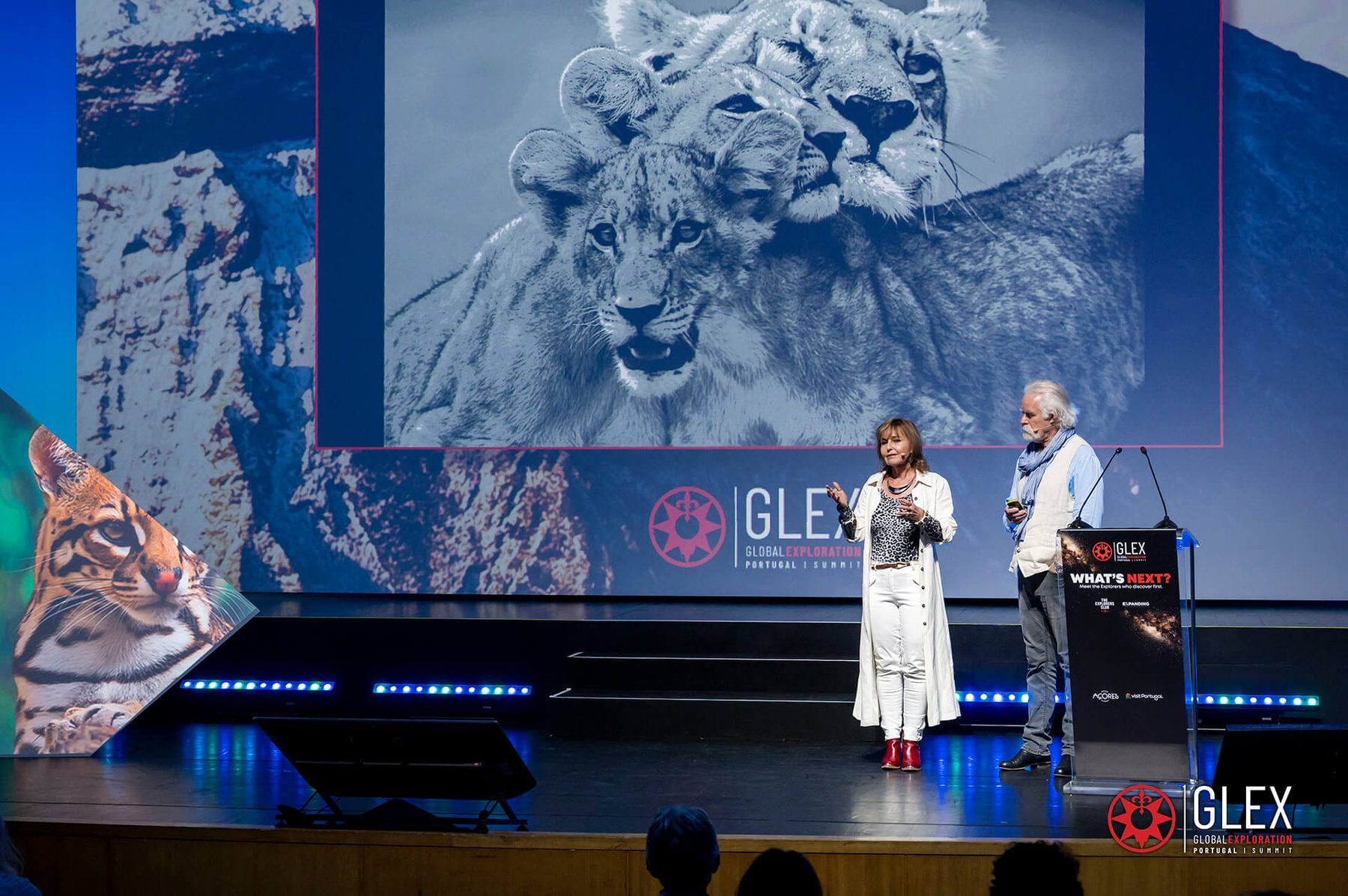
“I think photography is an intellectual extension of one's experience today, and you don't have to distinguish between being a photographer or not a photographer."
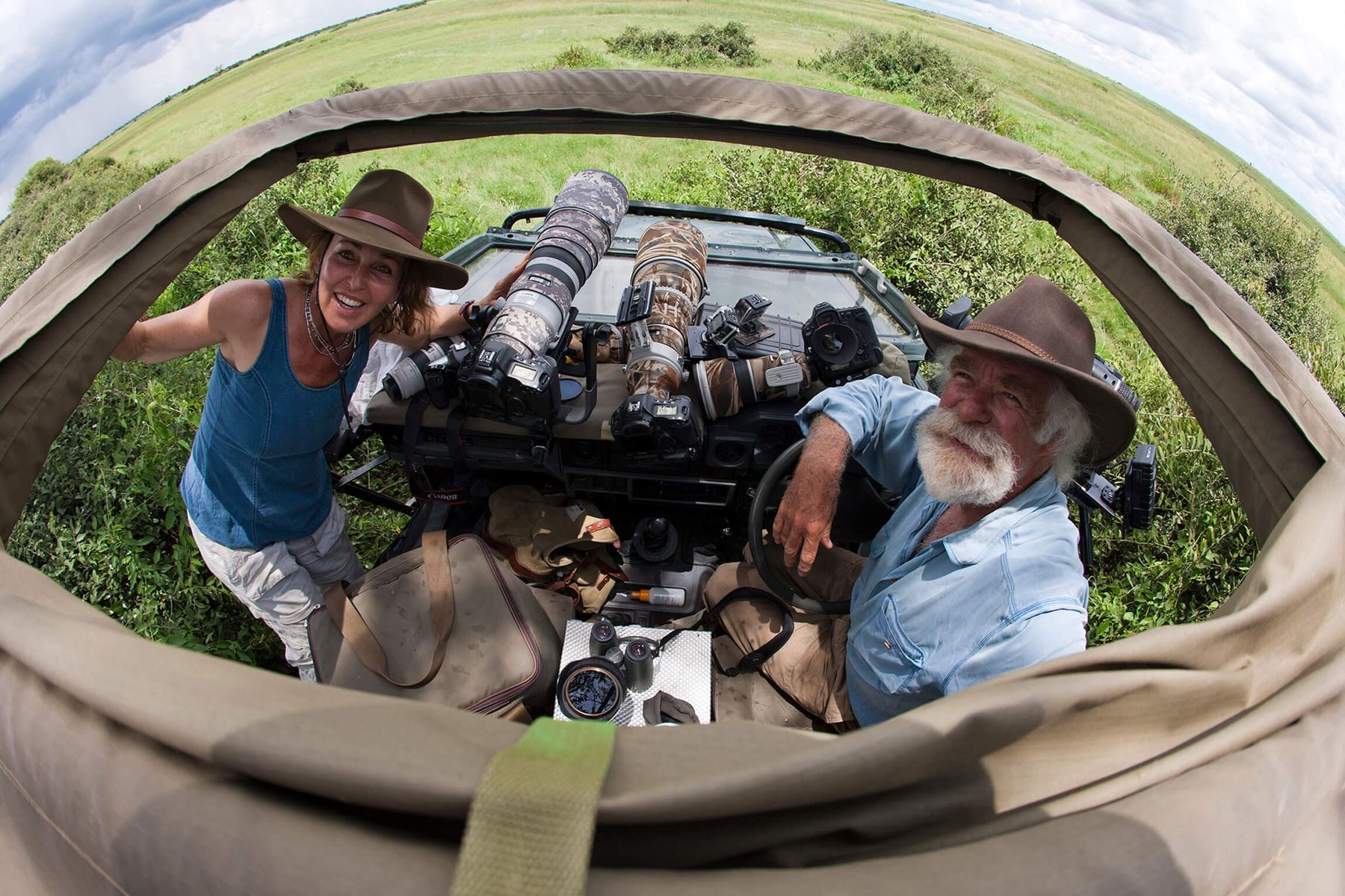
The Jouberts’ approach harnesses the power of visual media to advance conservation, and their camps that offer guests rare photographic opportunities in protected habitats are a win-win: Wildlife populations recover, while visitors get to channel their inner nature photographer. Plus, these aren’t just camps operated by esteemed conservationists with intimate knowledge of the land, but by world-renowned filmmakers well-versed in the influence of the image.
While they are long-time National Geographic Explorers, decorated with Emmys and a Peabody (their films even made it into a capsule in outer space, in case any Martians want to see what life is like on the African savanna!), at the heart of the couple’s story is deep affection — for each other, right since their meeting in high school — and for the planet. Their work also extends to emergency conservation with
, which moves the horned giants from high poaching areas to safety, and the
Rhinos Without Borders
, which works to halt the decline of lions, leopards, and cheetahs through projects that reduce human-wildlife conflict. They are also regularly asked to consult with governments and communities across the continent on how to recover and preserve land.
Big Cats Initiative
Ever-prolific, Beverly’s book of images,
, was published by National Geographic in 2025. Their two-part film
Wild Eye
Mara Rebirth
was also released internationally in 2025. Later in 2026, Dereck plans to have a memoir come out.
“I think our legacy is not just going to be film, but it is going to be conservation in general,” says Beverly. For them, all of it — the books, the films, the camps, the foundations, and the rewilding efforts — are part of the same mission.
“We’re in the media business, and we're in the tourism business, and we're in the conservation business, but they're all the same, actually,” says Dereck. “Each one of these is an activity that if we didn't do we wouldn't sleep well at night. And when we develop a new idea, it grabs us by the throat at four in the morning and drives us into a day. When I brief our staff, I remind them periodically on what business we really are in. And that is the business of saving the planet.”