 By The UNCHARTED® editors · 6 min read

Peter Allison first fell in love with Namibia and Botswana at the ripe age of 20, starting out as a barback before rising to camp manager and eventually becoming a sought-after guide. Today, he works with one of UNCHARTED’s partners, Natural Selection safari camps, who specialize in Southern Africa locales. Allison is the author of three hilarious books — including Whatever You Do, Don’t Run, a memoir packed with lighthearted stories and serious laughs that capture both the thrill and absurdity of life in the bush. (Is there a fine art to identifying birds by their sneeze?).

But for all his eloquence, Namibia — with its towering red sand dunes, haunting white clay salt pans, desert-adapted wildlife, and foggy coast — threatens to render him speechless. Its vast, soul-stirring spaces simply must be experienced, he says.
“I am the least philosophical, spiritual person you'll meet,” he tells us. “I don’t ‘namaste.’ I can't touch my toes, so yoga is out of the question. But in Namibia, you become those things. It would annoy Shakespeare, because no words adequately describe it.”
It’s not just the landscape that makes Namibia so compelling. Since gaining independence in 1990, this young nation has taken a thoughtful approach to tourism by placing the stewardship of its wild spaces and wildlife directly in the hands of its people: Rather than relying solely on national parks or top-down policies, they flipped the script and established communal conservancies where locals manage wildlife while benefiting from eco-tourism.
We spoke with Allison and learned why this destination deserves to be on everyone’s Africa bucket list.
This interview has been edited for clarity and concision.
Q1: How do you explain the appeal of Namibia as a safari destination, despite its near total lack of vegetation and comparatively low wildlife populations?
Q2: What are your favorite activities that go beyond the vehicle?
Break out the dune boards! You don't have to be a kid to enjoy that — the country has some of the world's highest sand dunes.
The key word you use there: safari. In most people's minds it has a narrow definition. But the original meaning of the word in Swahili is “to go on a journey.” A safari shouldn’t mean sitting in a four- wheel drive while somebody shows you things — that's really passive, and you should leave Africa feeling like you're really in it, not just having observed it. Otherwise, stick with your television — you'll get less sand in your ears.
Q3: What sort of traveler does Namibia appeal to?
I think everybody needs Namibia. People think, “Namibia isn’t for me,” but they need a bit of soul searching. You’ll realize how tiny you are.
"A safari shouldn’t mean sitting in a four- wheel drive while somebody shows you things — that's really passive, and you should leave Africa feeling like you're really in it, not just having observed it. Otherwise, stick with your television — you'll get less sand in your ears."
It's almost a shame Namibia is in Africa. On any other continent, it would be one of the most famous destinations. When people come there, they've often had their wildlife itch scratched in either neighboring Botswana or South Africa. But Namibia is heart-achingly beautiful, an absolute supermodel of a nation that doesn't have a bad angle.
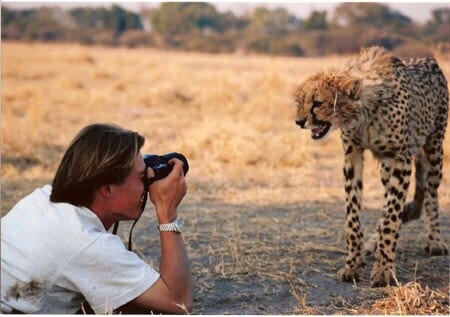
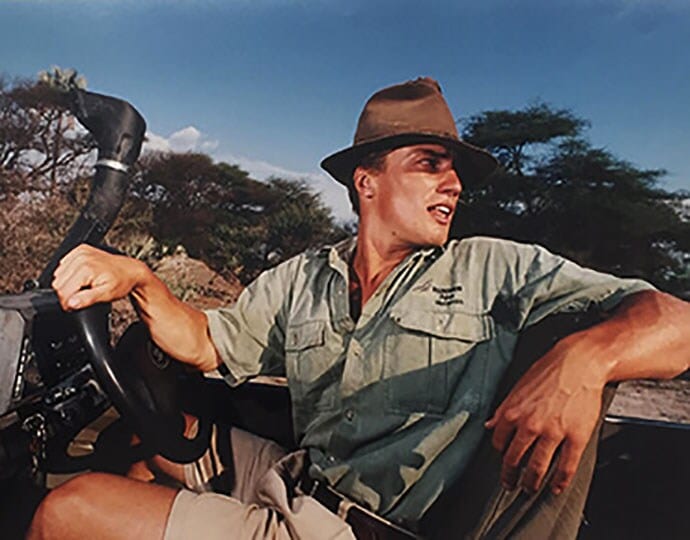
Q4: What are your top Namibia spots?
Q5: What are the most urgent conservation issues in Namibia, and how is Natural Selection answering the call?
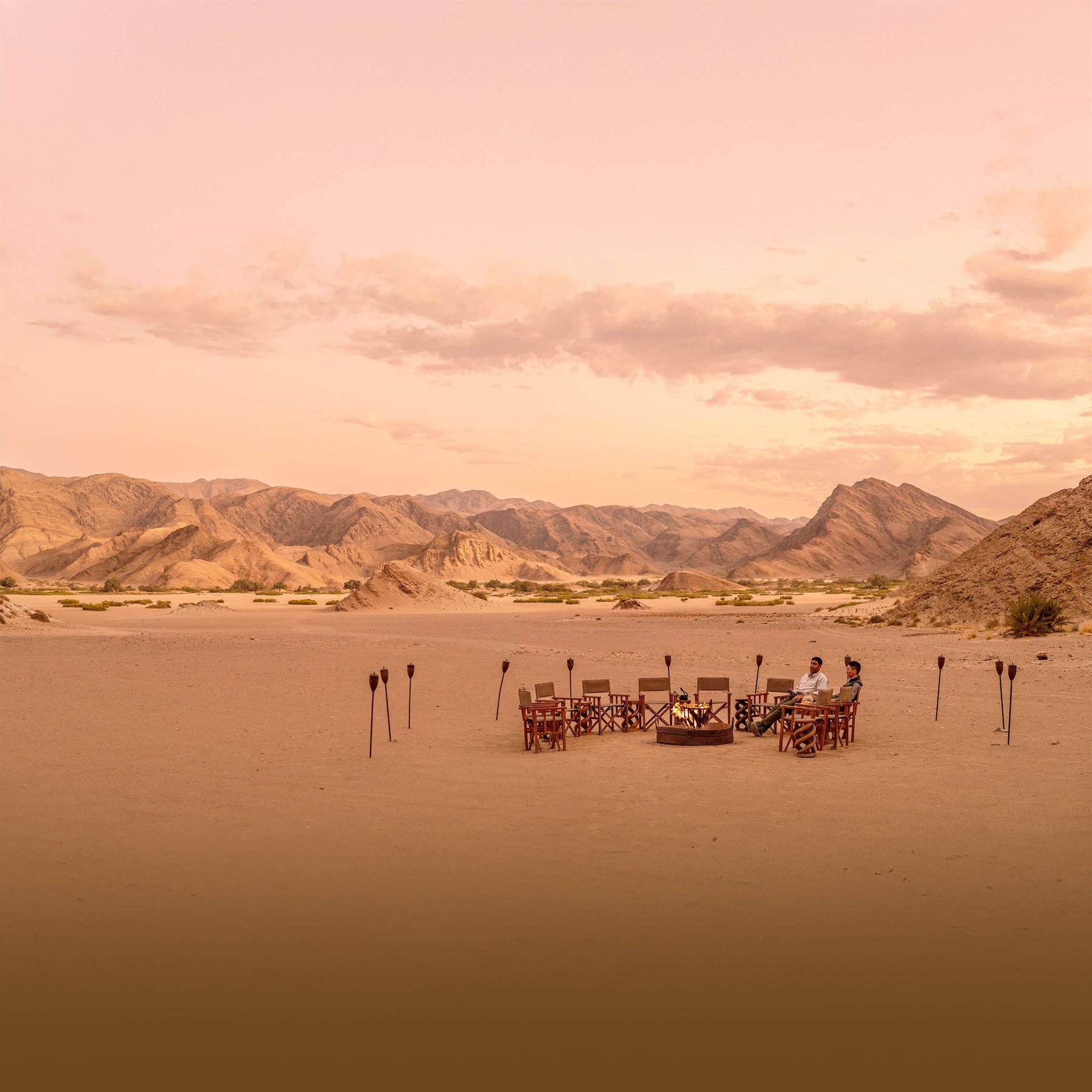
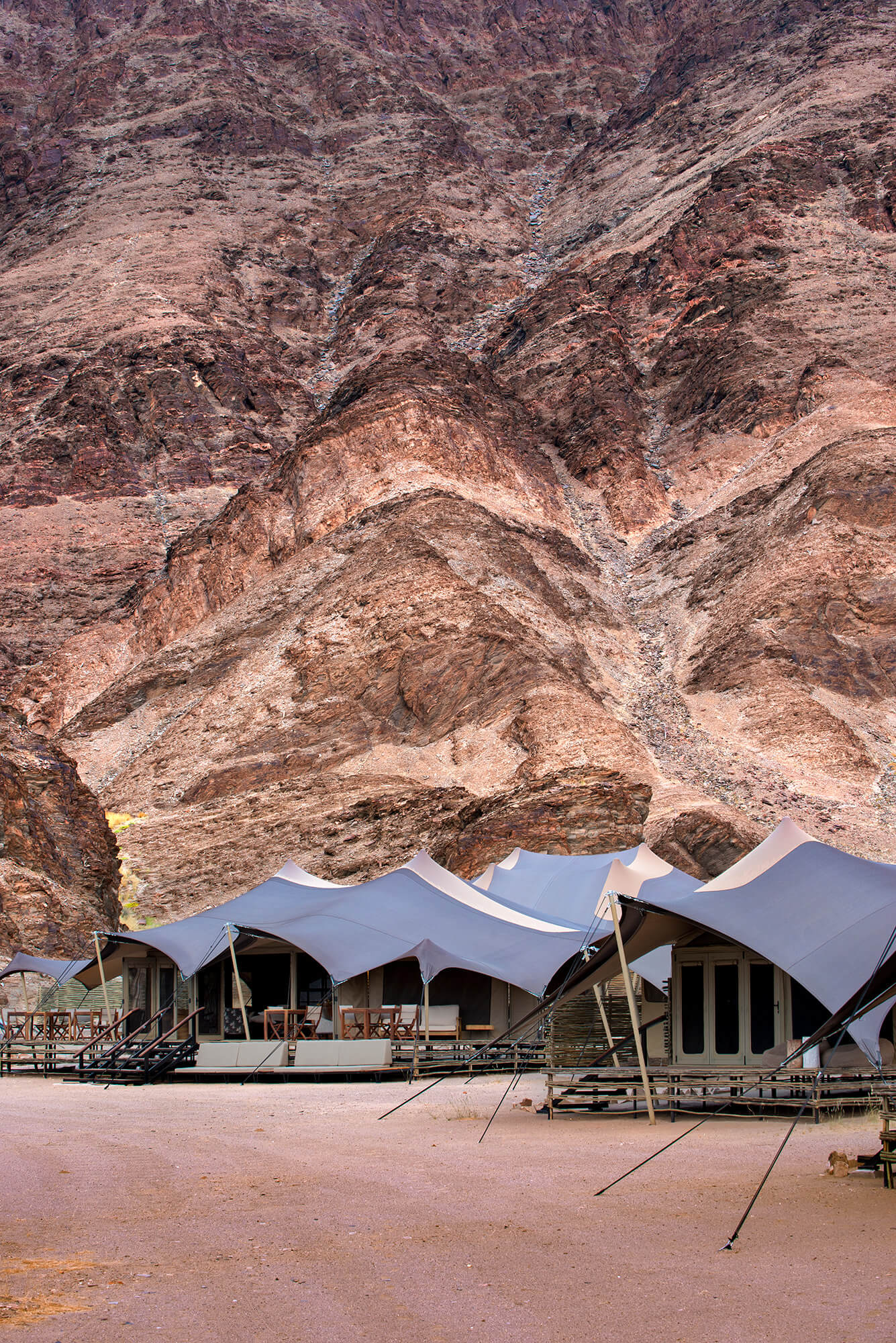
I'm gonna get controversial here. The two most famous places in Namibia are Sossusvlei and Etosha, and personally, I find them the least interesting. They're like the bread of a sandwich — and you need bread to make a sandwich — but what you really should be buying is the filling. To me, that means places like the Hoanib or other river valleys. But just a quick caveat here: When a Namibian says river, it's not the way most imagine it. A Namibian river is a dry riverbed that flows maybe one or two days a year. So they are these extraordinary ecosystems in this dry, dry desert.
We help with Save the Rhino trust — that’s a big one. We all know rhinos are imperiled everywhere, but Namibia has the last rhinos on Earth outside protected areas. These are the last rhinos still living just out in a landscape as they've always done, without a fence, without a formal piece of paper declaring a national park or game reserve. That is a testimony to our conservancy system, empowering the citizenry to have a say in how wildlife is used. Because community work is conservation work.
And then I also love the Skeleton Coast. What a great, evocative name. It's a different desert [since it fronts the Atlantic]. Namibia is like the Baskin-Robbins of deserts — you have so many different kinds. There are forms of life there that occur nowhere else on the planet.
Q7: Speaking of density, can you tell us about Namibia’s cities? Are they worth checking out?
Windhoek is overlooked as a capital city — there are great museums. Swakopmund is the kind of place that I think Salvador Dali would have liked. You have this German colonial history — so there are good breweries — but it is in this stark coastal desert. Fog rolls in every night, covering the whole town. It’s surreal, like someone spiked your drink, but you still end up going home alone!
Q6: If someone were trying to choose between adding Botswana or Namibia to their South African safari, how would you help them decide?
It’s not about a luxury of things, a luxury of stuff. It’s the luxury of space. Botswana does it well, but Namibia does it better than anywhere I've been. Namibia has that feeling of timelessness. What a luxury that is, to be reminded of how vast the world we live in is. So, that's why I would push Namibia. If they're obsessed with wildlife and they want photos of animals up close, Botswana all day, every day. But otherwise, I think Namibia, as the second or third least densely populated country, is incredibly beautiful and not a place to skip.
Q8: What opportunities are there for cultural encounters in Namibia?
Tribes like the Herero are in a time capsule. Due to the trauma induced by colonialism, they dress as if it is 1900, at the turn of the last century. Men, given the opportunity, will wear a suit in the middle of the desert, and women wear Victorian dresses, complete with the big bustle at the back. It's quite extraordinary.
"Namibia is like the Baskin-Robbins of deserts — you have so many different kinds."
Meanwhile, the Himba are some of the most traditional people still living in Southern Africa. They are nomadic, known for painting their skin and hair with a red ochre to protect against the sun. They wear very elaborate metallic bracelets, anklets, and necklaces woven with conch shells. There are no conch shells here, so that shows that they've been trading for a long time with people who came all the way from the far east. It's just amazing to see these cultures unchanged, and yet changed.
Africa | Outposts
Kenya | Outposts
Southern Africa | Outposts
Global | Roundup
Go Wild: Next-Level Safari Destinations
Style Meets Substance in these 3 Kenya Outposts
Safari Superstar: Meet the Visionary Empowering Africans
7 of the World’s Top Wildlife 7 of the World’s Top Wildlife Experiencess