 By The UNCHARTED® editors · 7 min read
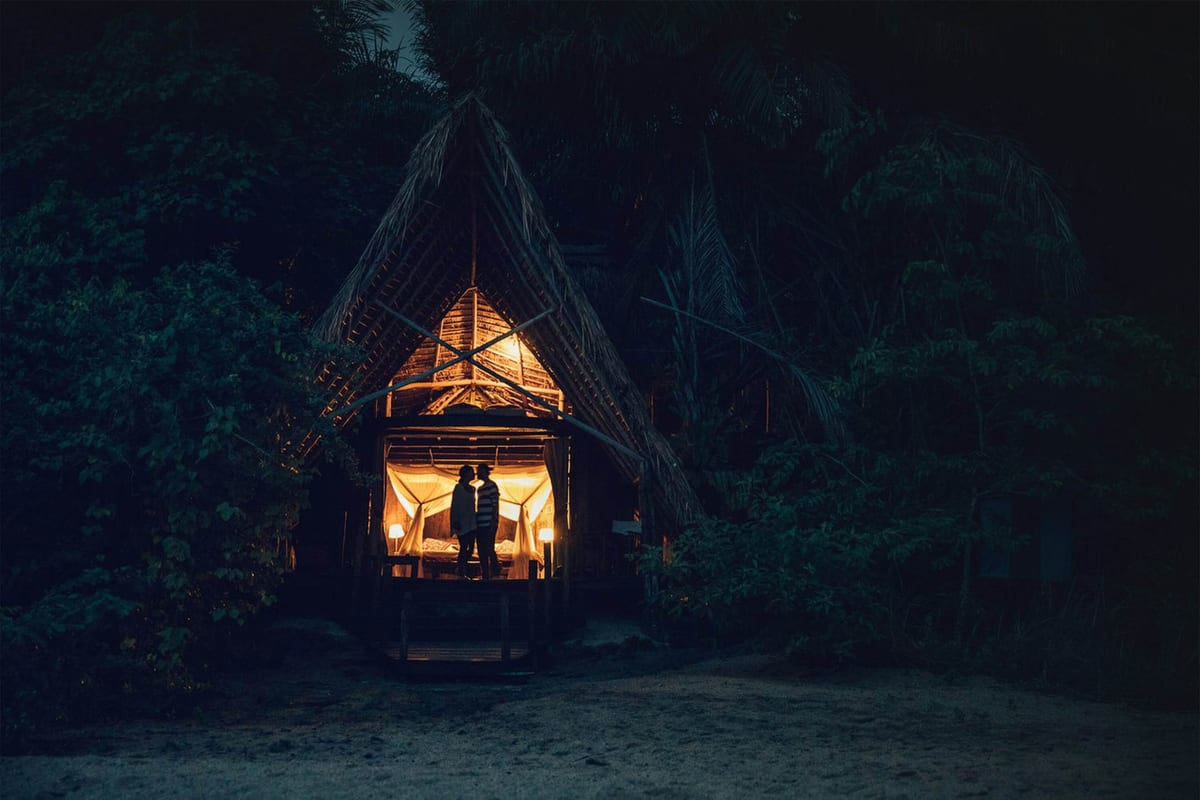
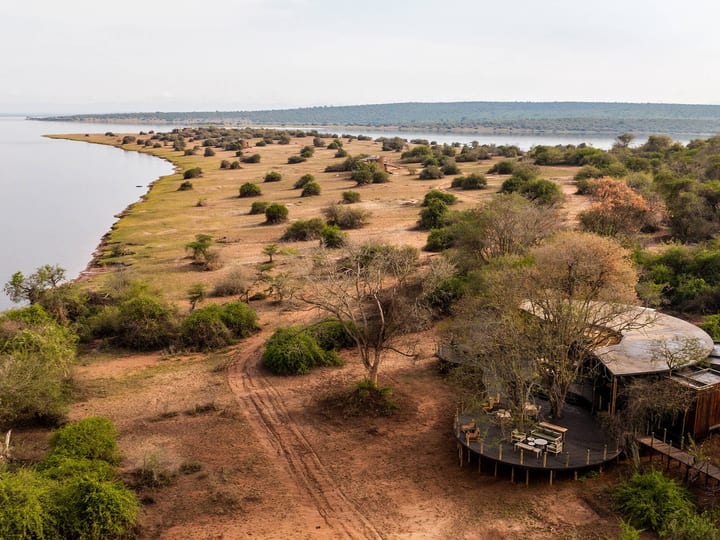
Mwiga Mambo and Butati Nyundo are without a doubt two of the greatest chimpanzee guides in Africa. You’ll find them both working at Greystoke Mahale, a remote camp on the glittering shores of Lake Tanganyika.
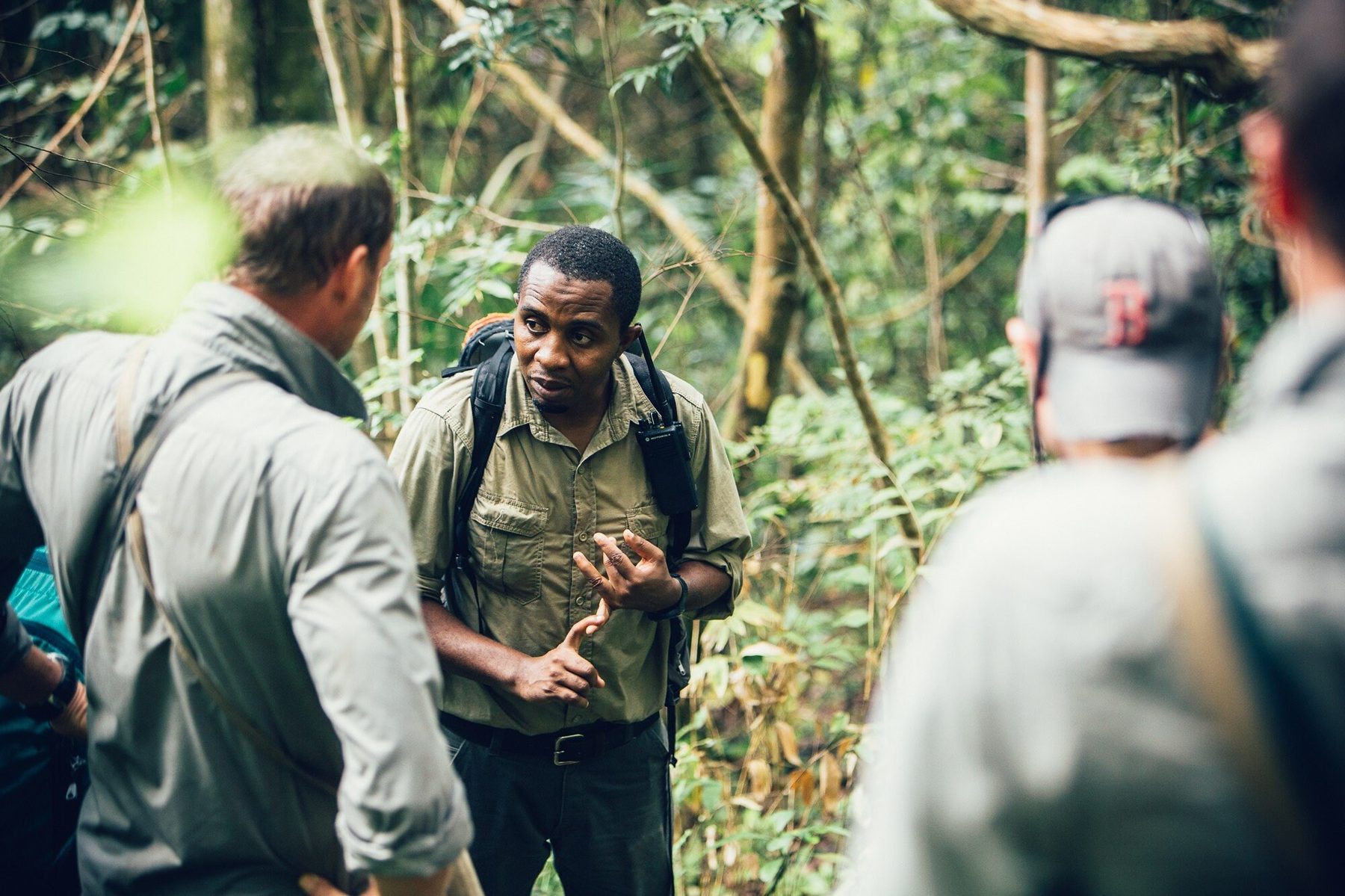
"People will be surprised by the passion we have for them, and the deep bond we have with the chimpanzees and their home."
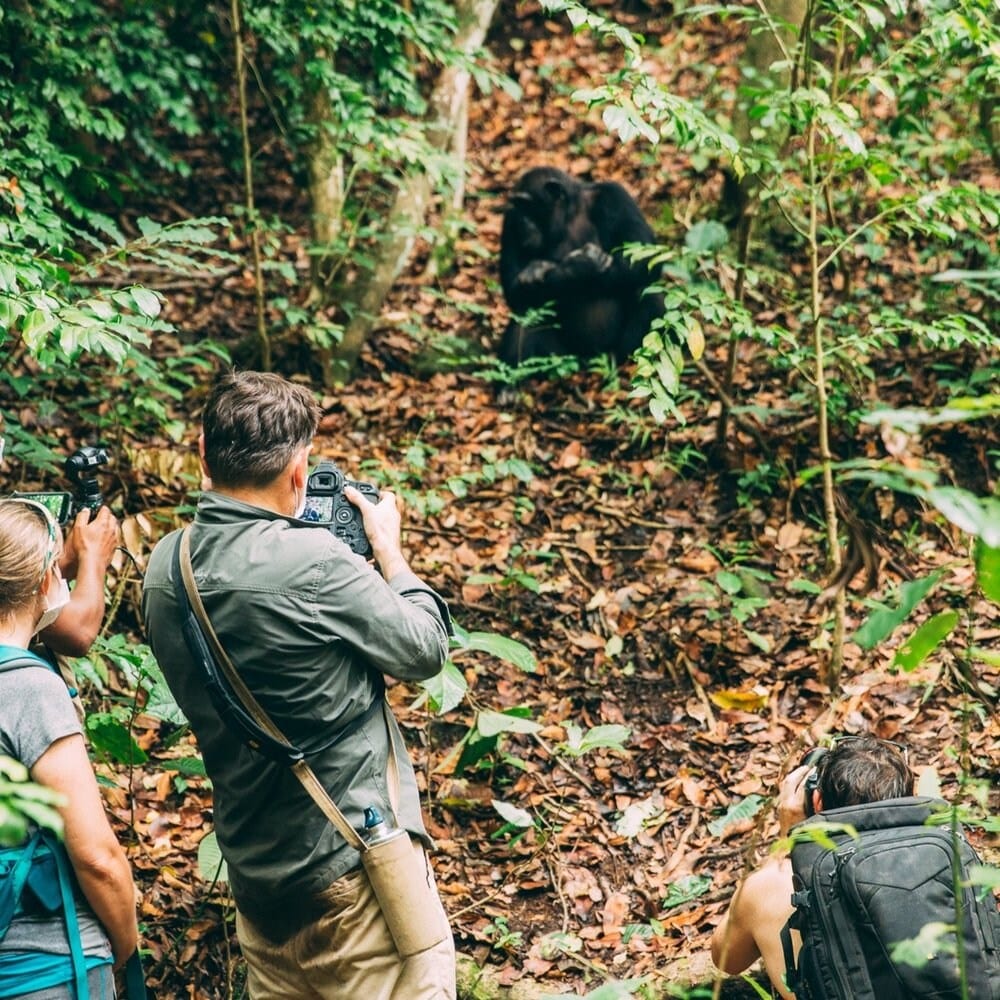
Mwiga and Butati are world-renowned: their surrogate family are the clan of chimpanzees found around Greystoke. From names down to the individual characteristics, keeping up with the primal politics of the chimp community is what they do. Mahale National Park is one of two protected chimpanzee habitats in Tanzania, alongside Gombe Stream National Park, where Mwiga first met renowned primatologist Jane Goodall when he was just 16 years old.
Q2: Mwiga, what was it like meeting Jane Goodall when you were young? How did she inspire you?
MWIGA: My family would talk about the chimpanzees as if they were people, they would talk about the politics of the community, and things like that, and I didn’t believe them. I doubted that they could be so much like us. But when Jane Goodall came to our school, she taught us about the chimps, and told us more stories, and she took us to see a documentary about them. Seeing the way they acted, seeing the alpha males take control, and seeing the babies play, I realized my family was right. I was like, oh my god, when can I get the chance to work with them? I convinced my family to take me to see them and I just wanted more and more. That’s what brought me to Greystoke Mahale.
Visiting these chimpanzee habitats is among the most remarkable experiences in Tanzania, but it requires venturing outside the well-trodden terrain of the northern corridor. We spoke with Mwiga and Butati about their experiences of becoming a guide, what is so special about chimpanzee communities, and why this less-traveled path of Tanzania is worth a visit.
Q1: You both have a long history with the Mahale Mountains, and the Greystoke Mahale camp—tell us a little about how you both came to work as guides?
Q3: I hear you both have pretty great chimpanzee impersonations. How did you get so good at them?
BUTATI: I was born and grew up inside Mahale Mountains National Park at the Kasiha Chimpanzees Research station, which is to the north of Greystoke Mahale. My father was involved with the chimpanzee research from the beginning, and in 2008 I started working there too—they were looking to have younger people involved who could speak English and also had knowledge of Mahale. I became a ranger-guide at the Kasiha Tourism Center, and, in 2014, after getting a diploma in wildlife management from Mweka Wildlife College in Kilimanjaro, I took a full-time job as a ranger-guide with the Greystoke Mahale camp, where I’ve been ever since.
BUTATI: It’s actually pretty easy to learn their vocalization when you’ve grown up around them, and work with them full-time.
MWIGA: For me, I’m an imitator, I believe it is a gift God has given me. With the chimpanzees, I don’t practice or anything, I just hear, and then I do. You spend so much time with them, you understand the sounds they’re making when they make them, and it can be really easy to imitate them. I’ll even sometimes imitate birds, bush pigs, lions, wildebeest, hyenas—so it’s just a gift.
Q4: It sounds like you really begin to understand the chimpanzees as you spend time with them. What are their social structures like? Are there any chimps you feel especially close to?
MWIGA: I was born in Kigoma town, but I came to Mahale first as a kid. My dad had been working there with Japanese chimpanzee researchers in the 1960s, and he was actually the first one to bring them to Mahale National Park, which was just a game reserve at the time. My dad eventually went to work for the government in Kigoma, which was why I was born there, but we could come back to Mahale often. I met Jane Goodall when I was in school in Kigoma town, and she inspired me to try and work with chimpanzees. My grandmother’s family was from the place where Greystoke camp is now, and in 1996, I learned they were looking for waiters, so that’s how I started. There were very few staff at the time, and I worked as a dishwasher, a room attendant, a boat captain, and a carpenter before I finally convinced them to let me be a tracker and go out on the chimpanzee expeditions. I was falling in love with the chimpanzees and I wanted to learn everything about them.
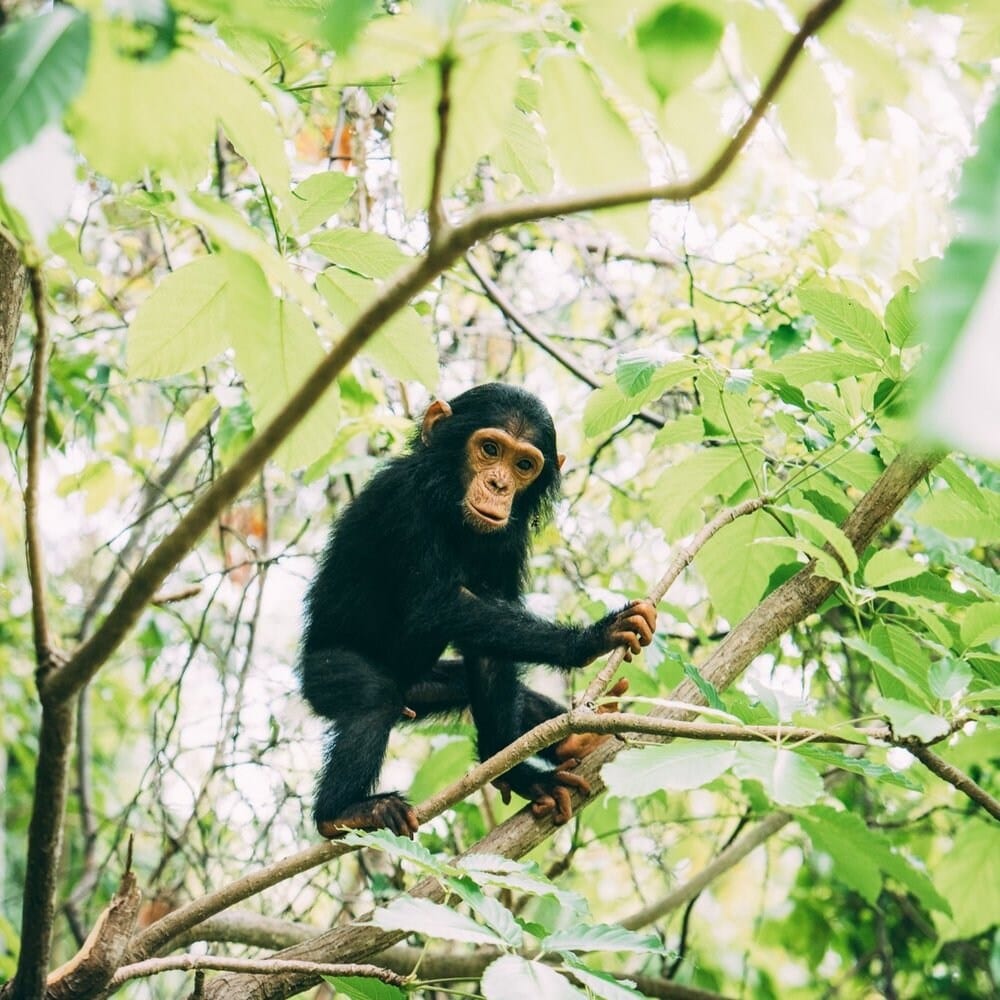
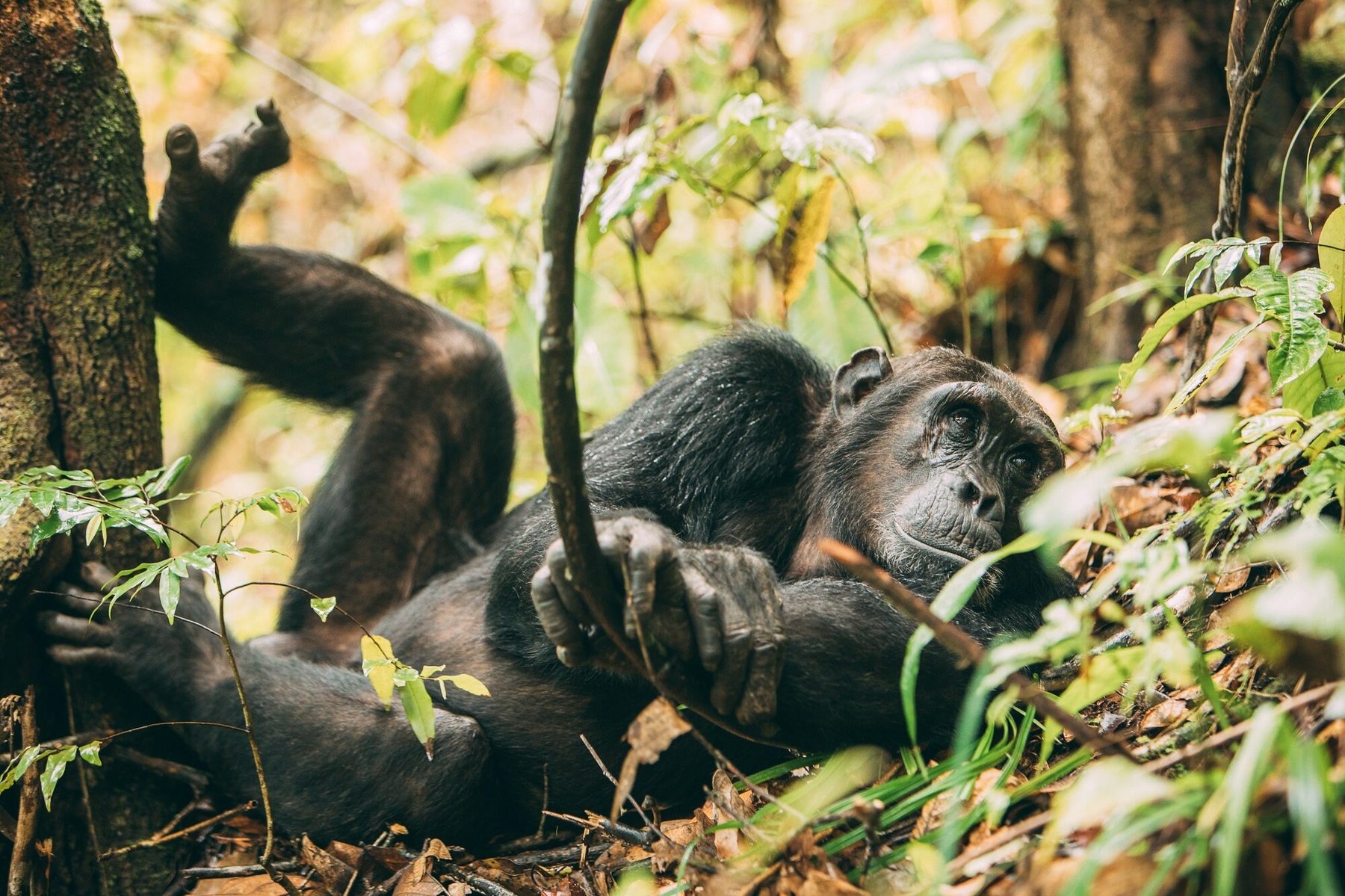
BUTATI: We call a group of chimpanzees a community, or a unity group, and it’s made up of many different males and females of different age groups, ranging from 10 individuals to 100. Males have a very clear-cut pecking order that starts with the alpha male, followed by the beta male, gamma male, and so on, all the way to the bottom. Females have a less conspicuous pecking order, and identifying the top female can be hard, as the females are generally less social members of the community. They can also move to permanently join other communities, which helps keep the gene pool strong.
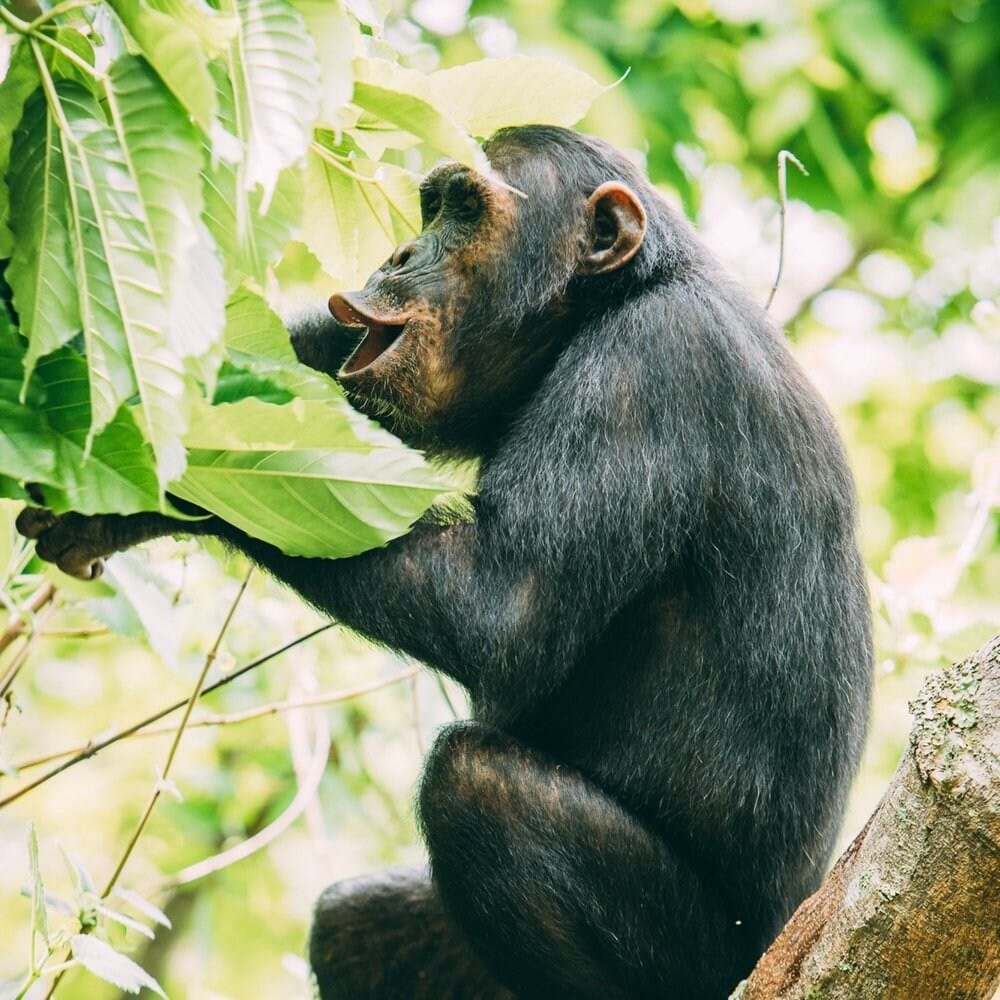
MWIGA: The alpha male really helps make sure the entire group is safe, he is responsible for that. My favorite chimp was Alofu; he was an alpha male, but he passed away. And now one of my favorites is Teddy, the current alpha male, who we think is maybe Alofu’s son. There’s no way to know for sure without a DNA test, but shares a character with Alofu. He has the same charging display, he has this swagger, he’s not as selfish as the other chimps, he likes to share. Like Alofu, Teddy is a peacemaker, and he holds a lot of political power in the community. Also, he’s a lady’s man—he knows how to be romantic just like Alofu was. I also really like Darwin, who is sort of Teddy’s body guard, which is very much like human behavior. He helped Teddy raise his rank to alpha male, and everywhere you see Teddy, you’ll see Darwin. These two will really help each other out, like if someone challenges Teddy, Darwin will come running like a bullet to help his “boss.” Darwin also really likes humans—he will give you a high five, or shake your hand if you hold it out.
Q5: For someone who’s never been to Mahale, or to the Katavi region, what makes the place so special? Why should travelers take time to visit this part of Tanzania and not just the well-trodden areas of the north?
Q6: What is something that most people might be surprised to learn about chimpanzee communities?
MWIGA: The similarities between the humans and the chimpanzees is really fascinating.
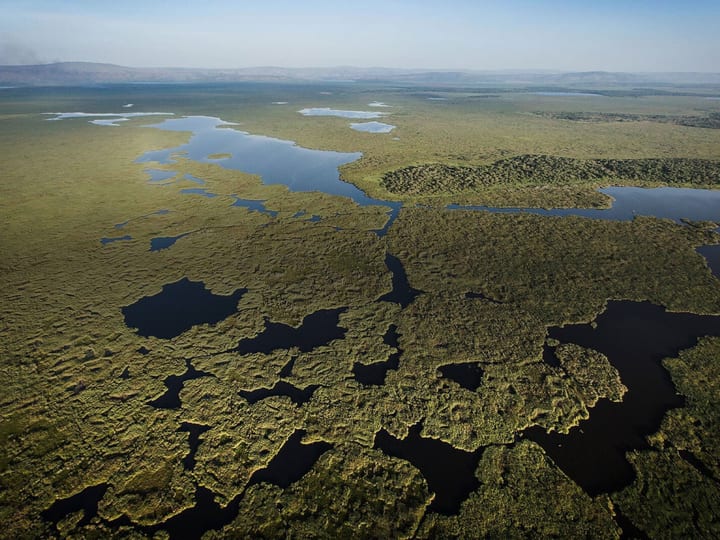
BUTATI: Tanzania is a vast and diverse country. Here in the west, Katavi National Park has one of the largest populations of hippos and crocs, there are huge herds of buffalo, and it’s way less crowded with people. It gives travelers the true feeling of wilderness that can connect them with nature in a way like never before. Mahale in particular is like paradise, with its unique combination of mountain slopes, lush green forest, and the blue water of Lake Tanganyika. Add chimpanzees to this combination, and it’s like nowhere else in the world.
BUTATI: They are so similar to us, in terms of behaviors, personalities and characters. Their politics are almost identical to ours. They may also be surprised by the passion we have for them as guides, and the deep bond we have with the chimpanzees and their home.
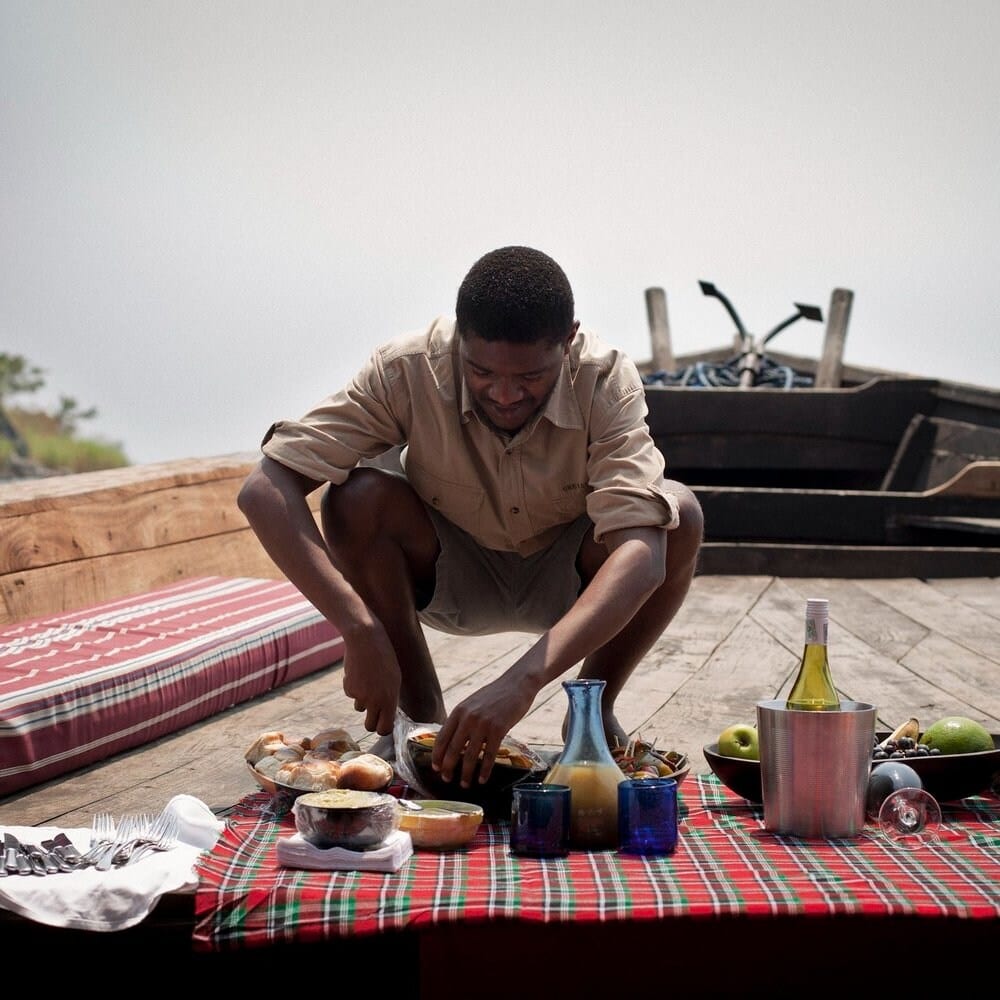
MWIGA: Mahale may be my home, but I can truly say that I never get bored here. It really has some of everything, the weather, the landscape, the chimps, the freshwater lake. About 17% of all the freshwater in the world is in Lake Tanganyika, which is the world’s longest lake, and the second deepest. You have the mountains, the deep forest, the bush, the beach, the chimpanzees—that’s why we call this place paradise. And it’s very remote—there is no road into the park, you have to take a flight to a boat to get here, so there are very few people. It feels very wild, and very private compared to the north.